

As a supplier of little rubber bands, I often get asked various questions about our products. One particularly interesting question that has come up is whether little rubber bands are soluble in water. In this blog post, I'll delve into the science behind rubber band solubility, explore the factors that influence it, and provide some practical insights for those using or considering purchasing our little rubber bands.

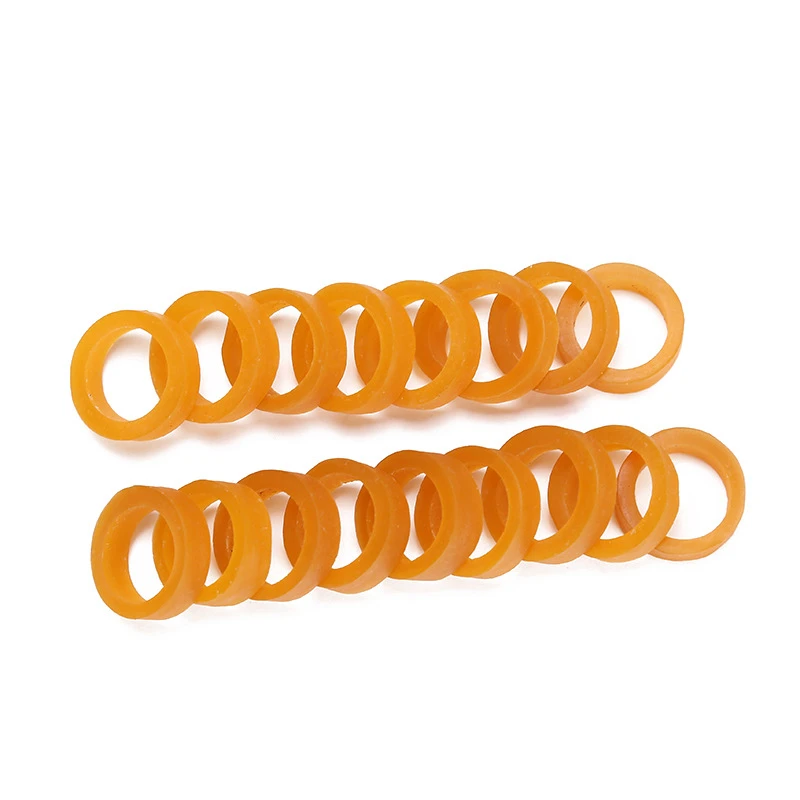
Understanding the Composition of Rubber Bands
To understand whether rubber bands are soluble in water, we first need to look at what they're made of. Most rubber bands are made from natural rubber or synthetic rubber compounds. Natural rubber is derived from the latex of rubber trees, specifically Hevea brasiliensis. It consists mainly of polyisoprene, a polymer with long chains of isoprene units. Synthetic rubbers, on the other hand, are man - made polymers designed to mimic or improve upon the properties of natural rubber. Examples of synthetic rubbers used in rubber bands include styrene - butadiene rubber (SBR) and neoprene.
Both natural and synthetic rubbers are hydrophobic, which means they repel water. The long polymer chains in rubber are non - polar, while water is a polar molecule. According to the principle of "like dissolves like" in chemistry, polar solvents (such as water) tend to dissolve polar solutes, and non - polar solvents dissolve non - polar solutes. Since rubber is non - polar and water is polar, rubber does not dissolve in water under normal conditions.
Factors Affecting the Interaction of Rubber Bands and Water
While rubber bands are generally insoluble in water, there are some factors that can affect their interaction with water:
Temperature
Increasing the temperature can sometimes enhance the solubility of substances. However, for rubber bands, raising the temperature has a limited effect on solubility. At normal environmental temperatures, rubber bands will not dissolve in water. Even at relatively high temperatures, the non - polar nature of rubber still prevents significant dissolution. But high temperatures can cause rubber to expand and may affect its physical properties over time, such as making it more brittle or losing its elasticity.
Chemical Additives
Some rubber bands may have chemical additives for various purposes, such as antioxidants, vulcanizing agents, or colorants. These additives could potentially interact with water under certain conditions. For example, if an additive is slightly polar, it might leach out into the water over a long period. However, the amount of these additives is usually small, and they are designed to be stable within the rubber matrix. So, in most cases, these additives do not cause the rubber band to dissolve in water.
Physical Abrasion
If a rubber band is physically abraded or damaged, it may expose more surface area to water. While this does not make the rubber dissolve, it can increase the rate at which water can penetrate into the rubber and cause swelling. Swelling is not the same as dissolution; it just means that water molecules are trapped within the rubber structure, causing it to expand.
Practical Implications for Users of Little Rubber Bands
The fact that little rubber bands are insoluble in water has several practical implications:
Use in Wet Environments
Our little rubber bands can be used in wet environments without the worry of them dissolving. For example, they can be used to bundle wet items, such as plants in a greenhouse or wet papers in a laboratory. They will maintain their shape and function, although they may become slippery when wet.
Cleaning
When it comes to cleaning rubber bands, water can be used without damaging them. You can simply rinse them under running water to remove dirt and debris. However, it's important to dry them thoroughly after cleaning to prevent the growth of mold or mildew, which can occur in a damp environment.
Our Little Rubber Band Products
As a supplier, we offer a wide range of little rubber bands to meet different needs. We have Short Rubber Bands, which are perfect for small - scale bundling tasks, like holding together a few sheets of paper or a small bunch of herbs. Our Extra Small Rubber Bands are even more delicate and can be used for intricate crafts or in jewelry - making. And our Small Wide Black Rubber Bands provide more surface area for bundling and are often used in industrial applications where a stronger hold is required.
Conclusion and Invitation to Contact
In conclusion, little rubber bands are insoluble in water due to their non - polar polymer structure. This property makes them suitable for a variety of applications, especially in wet or damp conditions. Whether you're a crafter, a business owner, or someone who just needs a reliable way to bundle items, our little rubber bands are a great choice.
If you're interested in purchasing our little rubber bands, we invite you to contact us for more information and to discuss your specific requirements. We are committed to providing high - quality products and excellent customer service.
References
- Atkins, P. W., & de Paula, J. (2006). Physical Chemistry. Oxford University Press.
- Smith, M. B., & March, J. (2007). March's Advanced Organic Chemistry: Reactions, Mechanisms, and Structure. John Wiley & Sons.