

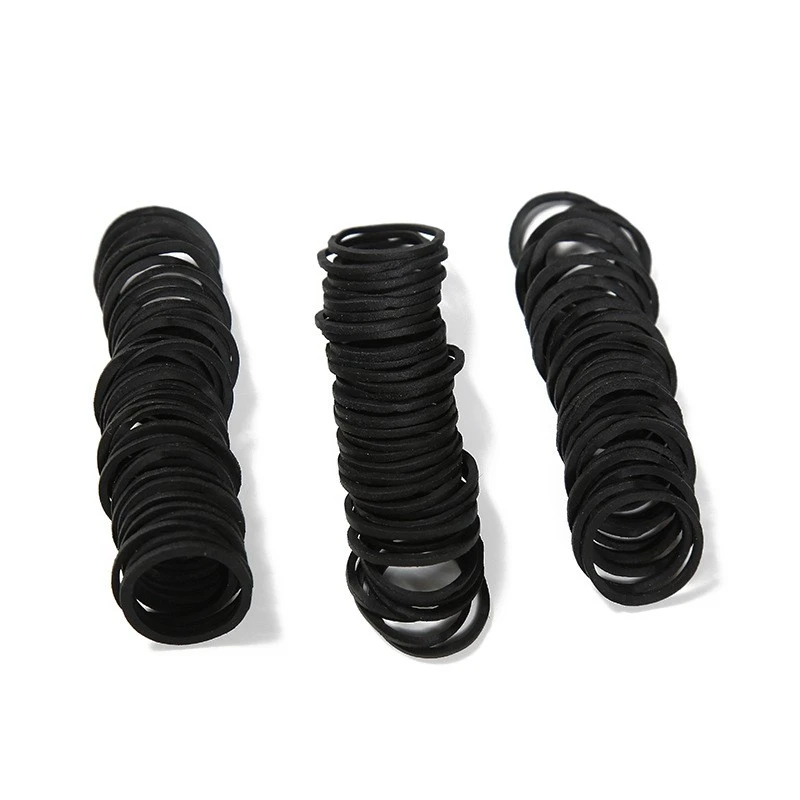
Hey there! I'm a supplier of Mini Rubber Rings, and I often get asked about whether these little guys are safe for the environment. It's a super important question, and today, I'm gonna break it down for you.
First off, let's talk about what mini rubber rings are made of. Most of the time, they're crafted from natural rubber or synthetic rubber. Natural rubber comes from the sap of rubber trees, which is a renewable resource. That's pretty cool, right? Trees grow, we get sap, and we make rubber. It's a cycle that's been going on for ages. On the other hand, synthetic rubber is man - made from petrochemicals. While it has its advantages like better durability and resistance to certain chemicals, it's not the most eco - friendly option since it relies on non - renewable resources.
When it comes to the production process, things can get a bit tricky. Making rubber rings, whether natural or synthetic, involves a series of steps that can have an environmental impact. For natural rubber, the harvesting process is relatively low - impact. However, the processing of the sap into usable rubber often requires a lot of water and energy. And if not managed properly, it can lead to water pollution.
Synthetic rubber production is even more energy - intensive. Petrochemicals need to be refined, and various chemicals are used in the manufacturing process. These chemicals can be released into the environment, contributing to air and water pollution. Plus, the extraction of petrochemicals from the ground has its own set of environmental issues, like habitat destruction and oil spills.
But it's not all doom and gloom. As a supplier, I'm always looking for ways to make our mini rubber rings more environmentally friendly. We're constantly researching and testing new materials and production methods. For example, we're exploring the use of bio - based synthetic rubbers. These are made from renewable resources like plants, so they're a more sustainable alternative to traditional synthetic rubbers.
Now, let's think about what happens to these mini rubber rings after we're done using them. One of the biggest problems with rubber products in general is their long decomposition time. Rubber doesn't break down easily in the environment. It can take decades, even centuries, for a rubber ring to decompose completely. This means that if they end up in landfills or the natural environment, they'll stick around for a really long time.
In the wild, mini rubber rings can pose a threat to wildlife. Animals might mistake them for food and swallow them, which can lead to choking or internal blockages. They can also get tangled up in the rings, causing injury or even death. And if they end up in the ocean, they become part of the growing problem of marine debris.
But there are solutions. Recycling is one of the best ways to reduce the environmental impact of mini rubber rings. We're working with recycling facilities to ensure that as many of our products as possible are recycled at the end of their life. Recycling rubber not only reduces the amount of waste in landfills but also saves energy and resources that would otherwise be used to make new rubber.
Another option is to promote the reuse of mini rubber rings. They can be used in all sorts of creative ways, from crafting projects to household organization. For example, you can use them to bundle cables or keep the lids of jars tight.
At our company, we're also trying to be more transparent about our environmental practices. We're providing more information to our customers about the materials we use and the impact of our production processes. We believe that by educating our customers, we can all work together to make more sustainable choices.
If you're in the market for mini rubber rings, we've got a great selection. Check out our Small Wide Rubber Bands, Ultra - micro Rubber Bands, and Small Round Rubber Bands. We're committed to providing high - quality products while also doing our part for the environment.
If you're interested in purchasing our mini rubber rings or have any questions about our environmental initiatives, don't hesitate to reach out. We're always happy to have a chat and discuss how we can meet your needs in a sustainable way.
In conclusion, while mini rubber rings do have some environmental challenges, there are ways to mitigate these issues. As a supplier, I'm dedicated to finding solutions and making our products as eco - friendly as possible. Together, we can make a difference and ensure that these little rubber rings don't have a big negative impact on our planet.

References
- "The Environmental Impact of Rubber Production" - Journal of Environmental Science and Technology
- "Recycling Rubber: Challenges and Opportunities" - International Journal of Recycling
- "Wildlife and Marine Debris: A Growing Concern" - Marine Biology Research Institute