

Are small rubber bands used in the construction industry? This is a question that often comes up when discussing the diverse applications of small rubber bands. As a supplier of small rubber bands, I have had the opportunity to explore various industries where these seemingly insignificant items can play a crucial role. In this blog post, I will delve into the potential uses of small rubber bands in the construction industry, highlighting their practicality and benefits.
First and foremost, let's understand what small rubber bands are. Small rubber bands come in various sizes, shapes, and materials. They can range from Micro Rubber Bands, which are extremely tiny and often used for delicate tasks, to Ultra - micro Rubber Bands, which are even smaller, and Short Rubber Bands, which are characterized by their limited length. These rubber bands are typically made from natural or synthetic rubber, offering different levels of elasticity, durability, and resistance to environmental factors.
In the construction industry, precision and organization are key. Small rubber bands can contribute significantly to both aspects. One of the primary uses of small rubber bands in construction is for bundling and organizing cables and wires. Construction sites are filled with a plethora of electrical and communication cables. Without proper organization, these cables can become a tangled mess, leading to safety hazards and difficulties in troubleshooting. Small rubber bands can be used to neatly bundle similar cables together, keeping them organized and easily identifiable. For example, a set of power cables can be bundled with a rubber band, while another set of data cables can be grouped separately. This not only makes it easier for construction workers to manage the cables during installation but also simplifies maintenance and repairs in the future.
Another area where small rubber bands prove useful is in the handling of small parts and components. Construction projects often involve the use of numerous small items such as nails, screws, washers, and bolts. These small parts can be easily misplaced or lost if not properly stored. Small rubber bands can be used to create makeshift containers or organizers for these parts. Workers can wrap a rubber band around a small cardboard box or a plastic bag to keep the parts secure. This ensures that the parts are readily available when needed, reducing the time spent searching for them and increasing overall productivity.
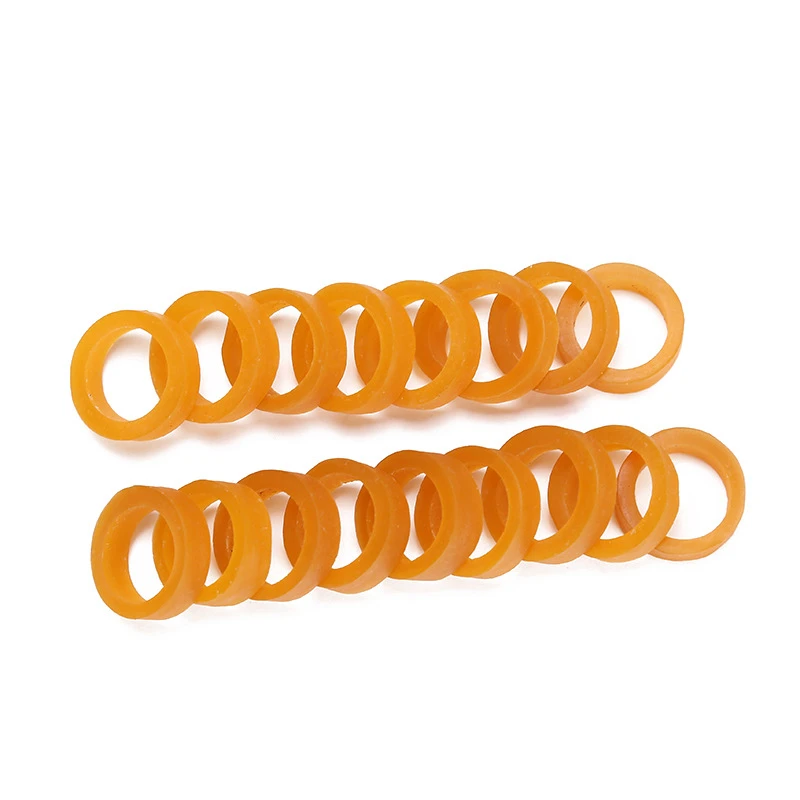

Small rubber bands can also play a role in the temporary fastening of materials. During the construction process, there are times when two materials need to be held together temporarily. For instance, when installing drywall, small rubber bands can be used to hold the drywall sheets in place while the screws are being inserted. This provides a quick and easy way to keep the materials aligned and stable, especially in situations where using more permanent fastening methods is not immediately possible.
In addition to their practical uses, small rubber bands can also contribute to safety on construction sites. They can be used to mark areas or equipment that require special attention. For example, a brightly - colored rubber band can be wrapped around a piece of machinery that is undergoing maintenance or a section of the construction site that is off - limits. This visual cue helps to prevent accidents and ensures that workers are aware of potential hazards.
Furthermore, small rubber bands can be used in the testing and quality control processes in construction. Some construction materials need to undergo elasticity or tension tests. Small rubber bands can be used as a simple and cost - effective way to conduct preliminary tests. By stretching a rubber band and comparing its behavior to the desired standards, workers can get a rough idea of the material's properties before more advanced testing methods are employed.
However, it is important to note that while small rubber bands have many potential uses in the construction industry, they also have limitations. Their strength and durability may not be sufficient for heavy - duty applications. In situations where high levels of tension or long - term use are required, more robust fastening methods may be necessary. Additionally, rubber bands can deteriorate over time, especially when exposed to extreme temperatures, sunlight, or chemicals. Therefore, regular inspection and replacement of rubber bands are essential to ensure their continued effectiveness.
As a supplier of small rubber bands, I understand the importance of providing high - quality products that meet the specific needs of the construction industry. Our small rubber bands are made from premium materials, ensuring excellent elasticity, durability, and resistance to environmental factors. We offer a wide range of sizes and types, including Micro Rubber Bands, Ultra - micro Rubber Bands, and Short Rubber Bands, to cater to different construction requirements.
If you are in the construction industry and are interested in exploring the potential uses of small rubber bands in your projects, I encourage you to get in touch with us. We would be more than happy to discuss your specific needs, provide samples, and offer competitive pricing. Our team of experts is dedicated to helping you find the right small rubber band solutions for your construction challenges.
In conclusion, small rubber bands can indeed find valuable applications in the construction industry. From cable organization to temporary fastening and safety marking, these small items can contribute to increased efficiency, productivity, and safety on construction sites. As a reliable supplier, we are committed to providing the best small rubber band products to support your construction projects. Don't hesitate to reach out and start a conversation about how our small rubber bands can benefit your business.
References
- Construction Industry Handbook: A comprehensive guide to construction practices and materials.
- Rubber Products Handbook: Information on the properties and applications of rubber materials.