

Hey there! As a natural rubber color supplier, I've been getting a lot of questions lately about whether there are any mechanical forces that can change the color of natural rubber. It's a super interesting topic, and I'm excited to share what I've learned with you.
First off, let's talk a bit about natural rubber. Natural rubber is an amazing material that comes from the latex of rubber trees. It's used in all sorts of products, from Premium Rubber Bands to car tires. One of the cool things about natural rubber is its color. Usually, it has a milky - white or light yellowish hue, but can mechanical forces really mess with that?
Understanding Mechanical Forces on Natural Rubber
Mechanical forces are basically the forces that act on an object when it's being pushed, pulled, twisted, or bent. When it comes to natural rubber, common mechanical forces include stretching, compression, and shearing.
Let's start with stretching. When you stretch a piece of natural rubber, like the ones in High Elastic Natural Rubber Bands, you're actually changing the arrangement of its polymer chains. Natural rubber is made up of long polymer chains that are all tangled up in a random mess. When you stretch it, these chains start to align in the direction of the stretch.

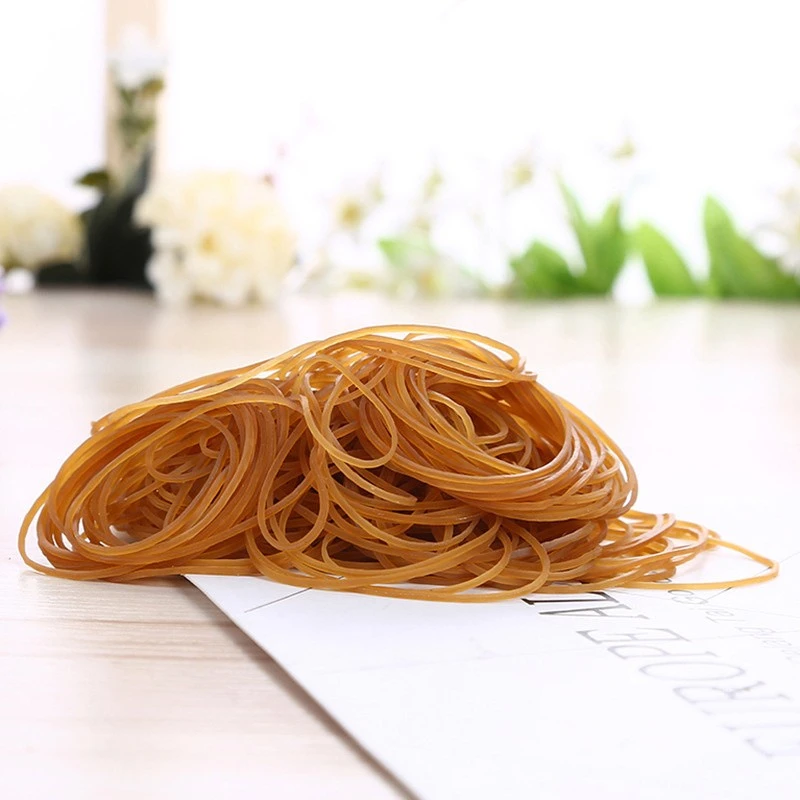
Now, here's the thing about the color change. In most cases, a simple stretch won't cause a visible color change. The reason is that the optical properties of the rubber, which determine its color, aren't affected significantly by the alignment of the polymer chains during normal stretching. However, if you stretch the rubber to an extreme degree, close to its breaking point, some changes might occur.
At high levels of stretching, the internal structure of the rubber can get so distorted that it can scatter light differently. This might lead to a very slight change in the perceived color. The rubber might look a bit more translucent or have a slightly different shade. But it's important to note that this is a very subtle change and might not be noticeable to the naked eye in all cases.
Compression is another mechanical force. When you compress natural rubber, you're squeezing those polymer chains closer together. Similar to stretching, normal compression doesn't usually cause a visible color change. But if you apply a really high - pressure compression, like in industrial processes where rubber is used in high - stress applications, there could be some changes.
Under extreme compression, the density of the rubber increases. This change in density can affect how light passes through the rubber. Just like with stretching, the rubber might become a bit more opaque or have a slightly different color tone. But again, this is a rare scenario and not something you'd typically see in everyday rubber products.
Shearing is when you apply a force that makes different layers of the rubber slide past each other. For example, if you twist a rubber band, you're applying a shearing force. Similar to stretching and compression, normal shearing forces don't cause a significant color change. But in high - energy shearing situations, where there's a lot of friction and heat generated within the rubber, there could be some chemical changes happening.
Chemical Reactions Triggered by Mechanical Forces
Mechanical forces can sometimes trigger chemical reactions in natural rubber, and these reactions can lead to color changes. When you subject rubber to high - stress mechanical forces, the energy from these forces can break some of the chemical bonds in the polymer chains.
For instance, oxygen in the air can react with the broken bonds, a process called oxidation. Oxidation of natural rubber can cause it to turn yellow or brown over time. This is more likely to happen when the rubber is exposed to mechanical stress in an oxygen - rich environment. So, if you have a bundle of Bundle Rubber Bands that are constantly being stretched and compressed in a normal room environment, oxidation could occur and gradually change their color.
Another chemical reaction that can be triggered by mechanical forces is cross - linking. Cross - linking is when the polymer chains in the rubber form new bonds with each other. This can happen when the rubber is under high - energy mechanical stress, like in some industrial manufacturing processes. Cross - linking can change the physical and chemical properties of the rubber, including its color. In some cases, cross - linked rubber might become darker or have a different color compared to the original rubber.
Environmental Factors and Mechanical Forces
It's important to note that environmental factors can work hand - in - hand with mechanical forces to cause color changes in natural rubber. For example, heat can accelerate the chemical reactions triggered by mechanical forces. If you stretch a rubber band on a hot day, the heat can speed up the oxidation process, making the color change more noticeable and happen faster.
UV light is another environmental factor. When natural rubber is exposed to UV light, it can break down the polymer chains and cause color changes. If you combine this with mechanical forces like stretching or compression, the effect can be even more pronounced. So, if you have rubber products that are exposed to sunlight and are also being used in a way that applies mechanical stress, you're more likely to see color changes.
Practical Implications for Our Products
As a natural rubber color supplier, understanding these factors is crucial. We want to make sure that our customers get the best - quality rubber products with consistent colors. When we're manufacturing Premium Rubber Bands, Bundle Rubber Bands, and High Elastic Natural Rubber Bands, we take steps to minimize the effects of mechanical forces and environmental factors on color.
We use additives in our rubber formulations to prevent oxidation and protect against UV light. These additives act as stabilizers, helping to keep the rubber's color consistent over time. We also test our products under different mechanical stress conditions to make sure that they don't undergo significant color changes during normal use.
Conclusion and Call to Action
So, to answer the question, yes, there are mechanical forces that can change the color of natural rubber, but it usually takes extreme conditions or a combination of mechanical forces and environmental factors. As a supplier, we're committed to providing high - quality natural rubber products with consistent colors.
If you're in the market for natural rubber products, whether it's for industrial use, office supplies, or any other application, we'd love to hear from you. We can offer a wide range of natural rubber products in different colors and specifications. Reach out to us to start a discussion about your specific needs and how we can meet them.
References
- "The Physics of Rubber Elasticity" by L. R. G. Treloar
- "Rubber Technology: Compounding, Vulcanization, and Testing" by R. F. Ohm
- "Polymer Chemistry: An Introduction" by Malcolm P. Stevens