

Can large rubber bands be used for fishing?
Fishing is an age - old activity that has evolved over time with the introduction of various tools and techniques. One of the questions that often arises in fishing circles is whether large rubber bands can be used for this purpose. As a supplier of large rubber bands, I'm here to explore this topic in depth and provide you with scientific insights and practical considerations.
The Physics Behind Using Rubber Bands for Fishing
The fundamental principle of using rubber bands in fishing lies in their elastic properties. According to Hooke's Law, the force exerted by a stretched elastic material like a rubber band is proportional to its extension. When a rubber band is stretched, it stores potential energy, which can be converted into kinetic energy when released. This sudden release of energy can be harnessed to cast a fishing line further or to provide an extra tug when reeling in a fish.
For instance, if you attach a fishing lure to one end of a large rubber band and then stretch the rubber band back, similar to how you would with a slingshot, the stored energy in the rubber band can propel the lure much farther than a traditional cast. This long - distance casting can be particularly useful when trying to reach fish that are located far from the shore or the boat.
Advantages of Using Large Rubber Bands for Fishing
There are several potential advantages to using large rubber bands in fishing.
- Increased Casting Distance: As mentioned earlier, the elastic energy of the rubber band can significantly increase the distance of your cast. This is especially beneficial in situations where you need to cover a large area of water to find fish. For example, in a large lake or a wide river, being able to cast farther can give you access to areas that might otherwise be out of reach.
- Cost - Effective: Large rubber bands are relatively inexpensive compared to some high - end fishing equipment. If you are on a budget or just starting out in fishing, using rubber bands can be a cost - effective alternative to buying expensive casting devices.
- Versatility: Rubber bands can be used in a variety of fishing setups. You can use them to create improvised fishing catapults or to add an extra boost to your existing fishing rod. They can also be used in different fishing environments, whether you are fishing from the shore, a boat, or even ice - fishing.
Types of Large Rubber Bands Suitable for Fishing
As a large rubber band supplier, I offer a range of products that could potentially be used for fishing.
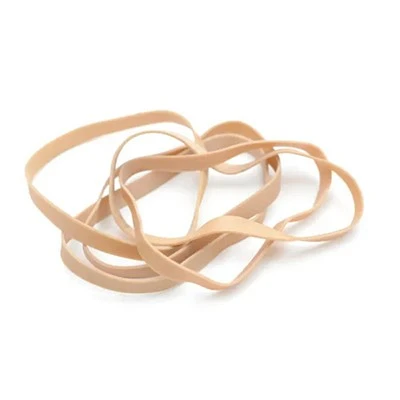
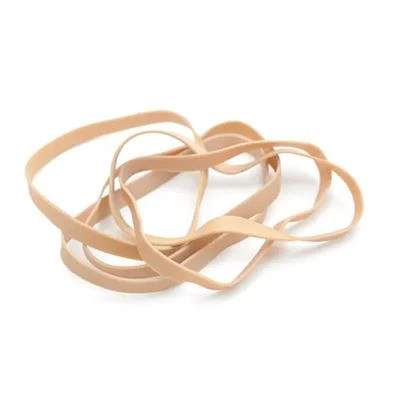
- Postal Rubber Bands: These rubber bands are typically made of natural rubber and are designed to be strong and durable. They come in various sizes and thicknesses, which can be selected based on the fishing requirements. Their strength makes them suitable for casting heavier lures or for providing a strong tug when reeling in larger fish.
- Super Strong Rubber Bands: As the name suggests, these rubber bands are engineered to have exceptional strength. They can withstand a high degree of stretching without breaking, which is crucial when using them for fishing. Super strong rubber bands can store a large amount of potential energy, allowing for even more powerful casts.
- Wide Large Rubber Bands: Wide rubber bands offer more surface area and can distribute the force more evenly. This can be beneficial when attaching a fishing line or a lure, as it reduces the risk of the rubber band slipping or breaking at the point of attachment. They are also more stable during the stretching and release process.
Challenges and Considerations
While there are many potential benefits to using large rubber bands for fishing, there are also some challenges and considerations.
- Accuracy: Achieving accurate casts with rubber bands can be more difficult compared to using a traditional fishing rod. The release of the rubber band's energy is less controlled, which can result in the lure going off in an unexpected direction. It takes practice to master the technique of using rubber bands for accurate casting.
- Safety: Rubber bands can be dangerous if not used properly. When stretched, they store a significant amount of energy, and if they break or snap back, they can cause serious injury. It is essential to use high - quality rubber bands and to follow proper safety procedures when handling them.
- Environmental Impact: Some rubber bands are made of synthetic materials that may not be biodegradable. If these rubber bands are accidentally lost in the water during fishing, they can contribute to environmental pollution. As a responsible supplier, we offer natural rubber bands that are more environmentally friendly.
Practical Applications and Setups
There are several practical ways to use large rubber bands in fishing.
- Rubber Band Catapult: You can create a simple rubber band catapult by attaching the rubber band to a Y - shaped frame. Tie one end of the rubber band to each arm of the Y, and then attach the fishing lure to the middle of the rubber band. Stretch the rubber band back and release it to cast the lure.
- Rubber Band - Assisted Rod: Another option is to use the rubber band in conjunction with a traditional fishing rod. You can attach one end of the rubber band to the fishing line near the reel and the other end to a fixed point on the rod. When casting, the rubber band will stretch and provide an additional boost of energy.
Conclusion
In conclusion, large rubber bands can indeed be used for fishing. They offer several advantages such as increased casting distance, cost - effectiveness, and versatility. However, they also come with challenges such as accuracy and safety concerns. As a large rubber band supplier, we offer a variety of products, including Postal Rubber Bands, Super Strong Rubber Bands, and Wide Large Rubber Bands, that can be suitable for different fishing applications.
If you are interested in exploring the use of large rubber bands for fishing or have any questions about our products, we encourage you to contact us to start a采购洽谈. We are committed to providing you with high - quality rubber bands and excellent customer service.
References
- Halliday, D., Resnick, R., & Walker, J. (2014). Fundamentals of Physics. Wiley.
- Arbib, M. A. (Ed.). (2003). The Handbook of Brain Theory and Neural Networks. MIT Press.