

Hey there! I'm in the business of supplying natural rubber color, and today I want to dig into an interesting question: Can the color of natural rubber be used to monitor degradation?
First off, let's talk a bit about natural rubber. Natural rubber is a pretty amazing material. It comes from the latex of rubber trees, and it's got some great properties like high elasticity and good tear resistance. But like any material, it doesn't last forever. Over time, it can degrade due to various factors such as heat, oxygen, light, and chemicals.
Now, the color of natural rubber is something that can change as it degrades. When natural rubber is fresh, it usually has a pale yellowish - white color. This is the natural state of the rubber, and it's what you'll typically see in products like Pure Rubber Bands. These bands are made from high - quality natural rubber, and their initial color gives you an idea of the rubber's purity and freshness.
As the rubber starts to degrade, its color can change. Oxidation is one of the main culprits here. When natural rubber is exposed to oxygen in the air, the rubber molecules start to react with the oxygen. This chemical reaction can lead to the formation of new compounds on the surface of the rubber. These new compounds often have different colors than the original rubber. For example, the rubber might start to turn a darker yellow, or even brown in some cases.
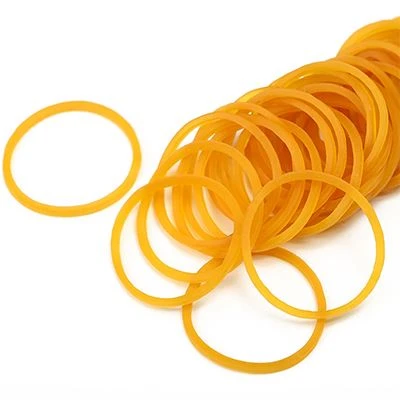

Heat also plays a big role in the color change of natural rubber. High temperatures can speed up the degradation process. If you leave a rubber product in a hot environment for a long time, you'll likely notice that its color starts to change more rapidly. Think about leaving a pack of Thick Natural Color Rubber Bands in a car on a sunny day. The heat inside the car can cause the rubber to break down faster, and you'll see the color shift from its original natural shade.
Light, especially ultraviolet (UV) light, can also cause color changes in natural rubber. UV light has enough energy to break the chemical bonds in the rubber molecules. This not only weakens the rubber but also causes it to change color. You might have noticed that rubber products that are constantly exposed to sunlight, like outdoor rubber seals or some types of Natural Color Rubber Bands used in outdoor settings, tend to fade or darken over time.
So, can we really use the color of natural rubber to monitor degradation? Well, it's not a perfect method, but it can give us some useful clues. If you're a manufacturer using natural rubber in your products, you can keep an eye on the color of the rubber during the production process and in the finished products. A sudden or significant color change could indicate that something is going wrong, like an issue with the storage conditions or an unexpected chemical exposure.
For example, if you're making rubber gaskets and you notice that the color of the rubber is getting darker than normal during the curing process, it could mean that the temperature is too high or that there's too much oxygen in the curing environment. By catching these issues early, you can adjust the production process to prevent further degradation and ensure the quality of your products.
In the field of quality control, color monitoring can be a simple and cost - effective way to assess the condition of natural rubber. Instead of using complex and expensive analytical techniques all the time, you can start by just looking at the color of the rubber. Of course, this method has its limitations. The color change might not always accurately reflect the degree of degradation. Sometimes, the rubber might change color due to surface contamination rather than actual degradation of the bulk material.
But overall, it's a useful tool in our toolkit. If you're in the market for natural rubber products, you can also use color as a quick way to check the quality. When you're buying Natural Color Rubber Bands, for instance, a band with an abnormal color might be a sign that it's been stored poorly or is already starting to degrade.
Now, as a natural rubber color supplier, I know how important it is to have high - quality rubber products. That's why we take extra care in the sourcing and processing of our natural rubber. We make sure that the rubber we use has the right initial color and that it's less likely to degrade quickly.
If you're interested in purchasing natural rubber products, whether it's for industrial use, crafts, or any other application, I'd love to talk to you. We have a wide range of natural rubber color options available, and we can work with you to find the perfect product for your needs. Just reach out, and we can start a conversation about your requirements.
In conclusion, while the color of natural rubber isn't a foolproof way to monitor degradation, it can provide valuable insights. By paying attention to the color changes, we can take steps to prevent degradation, improve product quality, and make more informed decisions when buying and using natural rubber products.
References
- "The Chemistry of Rubber Degradation" - A textbook on polymer chemistry
- Research papers on the effects of environmental factors on natural rubber properties