

Hey there! As a supplier of brown rubber bands, I often get asked some interesting questions. One of the most common ones is, "Do brown rubber bands melt at high temperatures?" Let's dig into this topic and find out the answer.
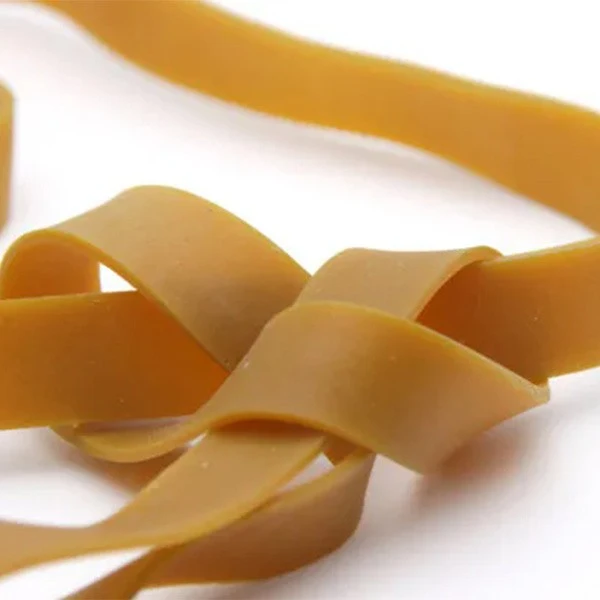
First off, let's talk a bit about what brown rubber bands are. Brown Rubber Band come in all shapes and sizes. We've got Small Brown Rubber Bands that are perfect for small - scale projects like holding a few sheets of paper together or bundling up some craft materials. And then there are Heavy Duty Rubber Mold Bands which are much stronger and can be used for more industrial or heavy - use applications.
Now, to understand whether they melt at high temperatures, we need to know what rubber is made of. Most rubber bands are made from natural rubber or synthetic rubber. Natural rubber comes from the latex of rubber trees, while synthetic rubber is man - made through chemical processes. Both types have different properties when it comes to heat resistance.
Natural rubber has a relatively low melting point. In general, it starts to soften at around 100 - 120 degrees Celsius (212 - 248 degrees Fahrenheit). When it reaches about 150 - 180 degrees Celsius (302 - 356 degrees Fahrenheit), it can start to melt. The brown color of the rubber bands doesn't really change this property. The color is usually added through pigments during the manufacturing process, and these pigments don't have a significant impact on the melting point of the rubber itself.
Synthetic rubber, on the other hand, can have a wider range of melting points depending on its composition. Some types of synthetic rubber can withstand much higher temperatures than natural rubber. For example, silicone rubber, a type of synthetic rubber, can handle temperatures up to 200 - 300 degrees Celsius (392 - 572 degrees Fahrenheit) without melting. But not all brown rubber bands are made of silicone rubber. Most of the common ones you'll find in the market are either natural rubber or a blend of natural and synthetic rubber.
So, if you expose your brown rubber bands to high temperatures, what will happen? Well, if the temperature is just slightly above the softening point, the rubber bands will start to lose their elasticity. They'll become sticky and might start to deform. You'll notice that they won't snap back into shape as easily as they used to. If the temperature keeps rising and reaches the melting point, the rubber will turn into a gooey mess.
Let's say you're using small brown rubber bands to hold some items in a hot environment, like near a heater or in a car on a very hot day. If the temperature inside the car or near the heater gets high enough, the rubber bands will start to show signs of damage. They might break more easily, or if it's really hot, they'll melt and stick to whatever they're holding.
For heavy - duty rubber mold bands, they're designed to be more durable. But even they have their limits. If you're using them in an industrial setting where there are high - temperature processes, you need to make sure the temperature doesn't exceed their heat - resistance threshold. Otherwise, you'll end up with a mess and potentially damaged equipment.
There are also some factors that can affect how quickly rubber bands melt at high temperatures. The thickness of the rubber band plays a role. Thicker rubber bands take longer to heat up and might be able to withstand high temperatures for a bit longer compared to thinner ones. The size of the rubber band also matters. Smaller rubber bands heat up faster because they have a larger surface - area - to - volume ratio.
Another thing to consider is the quality of the rubber bands. Higher - quality rubber bands are often made with better - quality rubber and manufacturing processes. They might have better heat - resistant properties compared to cheaper, lower - quality ones. So, if you're in an environment where high temperatures are a concern, it's worth investing in better - quality brown rubber bands.

Now, you might be wondering how you can protect your brown rubber bands from high temperatures. If you're using them in a hot place, try to find a way to keep the temperature down. For example, if you're using them in a car, park in the shade or use a sunshade to reduce the interior temperature. If it's an industrial setting, you can use insulation or cooling systems to keep the rubber bands at a safe temperature.
As a supplier, I've seen a lot of customers who have had issues with rubber bands melting in high - temperature situations. Some didn't realize the heat - resistance limits of the rubber bands they were using, while others just didn't take the necessary precautions. That's why I always recommend that customers understand the environment where they'll be using the rubber bands and choose the right type accordingly.
If you're in the market for brown rubber bands, whether it's the small ones for your office or the heavy - duty ones for your business, we've got you covered. We offer a wide range of brown rubber bands with different heat - resistance properties. You can choose the ones that are best suited for your needs.
If you have any questions about our brown rubber bands, especially regarding their performance in high - temperature environments, feel free to reach out. We're here to help you make the right choice for your specific application. Whether you're a small business owner looking for a reliable supply of rubber bands or an individual with a DIY project, we can provide you with the information and products you need.
In conclusion, brown rubber bands can melt at high temperatures, but the exact temperature depends on the type of rubber they're made of. Natural rubber has a relatively low melting point, while some synthetic rubbers can handle higher temperatures. By understanding these properties and taking the right precautions, you can ensure that your brown rubber bands last longer and perform well in your applications. So, if you're interested in purchasing brown rubber bands, don't hesitate to contact us. We'll be happy to assist you with your procurement needs.
References
- "Rubber Technology Handbook" by Werner Hofmann
- "The Science of Rubber" by John A. Brydson