

Hey there! As a supplier of colored rubber bands, I've heard a ton of questions from customers. One question that keeps popping up is, "Do colored rubber bands lose their shape after stretching?" Today, I'm gonna dive deep into this topic and share some insights based on my experience in the business.
First off, let's talk about what colored rubber bands are made of. Most colored rubber bands are made from natural rubber or synthetic rubber. Natural rubber comes from the sap of rubber trees, while synthetic rubber is made through chemical processes. The color is usually added during the manufacturing process, using dyes or pigments.
Now, let's get to the main question: do they lose their shape after stretching? Well, the answer isn't a simple yes or no. It depends on a few factors.
Factors Affecting Shape Retention
1. Type of Rubber
As I mentioned earlier, there are two main types of rubber: natural and synthetic. Natural rubber has excellent elasticity, which means it can stretch a lot and return to its original shape. However, it's also more sensitive to environmental factors like heat, light, and oxygen. Over time, these factors can cause the rubber to break down and lose its elasticity.
Synthetic rubber, on the other hand, is more resistant to environmental factors. It can maintain its shape better under different conditions. But it might not have the same level of elasticity as natural rubber. So, if you're using colored rubber bands in a high - stress environment, synthetic rubber might be a better choice.
2. Quality of Manufacturing
The way the colored rubber bands are made also plays a big role. High - quality rubber bands are made with precise manufacturing processes. The rubber is properly mixed, and the color is evenly distributed. These bands are more likely to retain their shape after stretching.
On the other hand, low - quality rubber bands might have uneven thickness or poor color adhesion. When you stretch these bands, they're more likely to deform or break. So, it's always a good idea to buy from a reliable supplier. If you're looking for high - quality Colored Rubber Bands for Crafts, we've got you covered.
3. Degree of Stretching
How much you stretch the colored rubber bands matters a lot. If you stretch them just a little bit, within their elastic limit, they'll usually return to their original shape. But if you stretch them too far, you can damage the rubber molecules. Once the molecules are damaged, the band won't be able to return to its original shape.
For example, if you're using colored rubber bands to hold a small stack of papers, you probably won't stretch them too much, and they'll keep their shape. But if you're trying to use them to tie up a large bundle of items, you might stretch them beyond their limit.
4. Environmental Conditions
The environment where you use and store the colored rubber bands can also affect their shape retention. Heat is one of the biggest enemies of rubber. High temperatures can cause the rubber to soften and lose its elasticity. So, if you leave your colored rubber bands in a hot car or near a heater, they're more likely to lose their shape.
Light and oxygen can also cause the rubber to degrade over time. UV light from the sun can break down the rubber molecules, making the bands brittle. Oxygen can react with the rubber and cause oxidation, which also affects its elasticity.
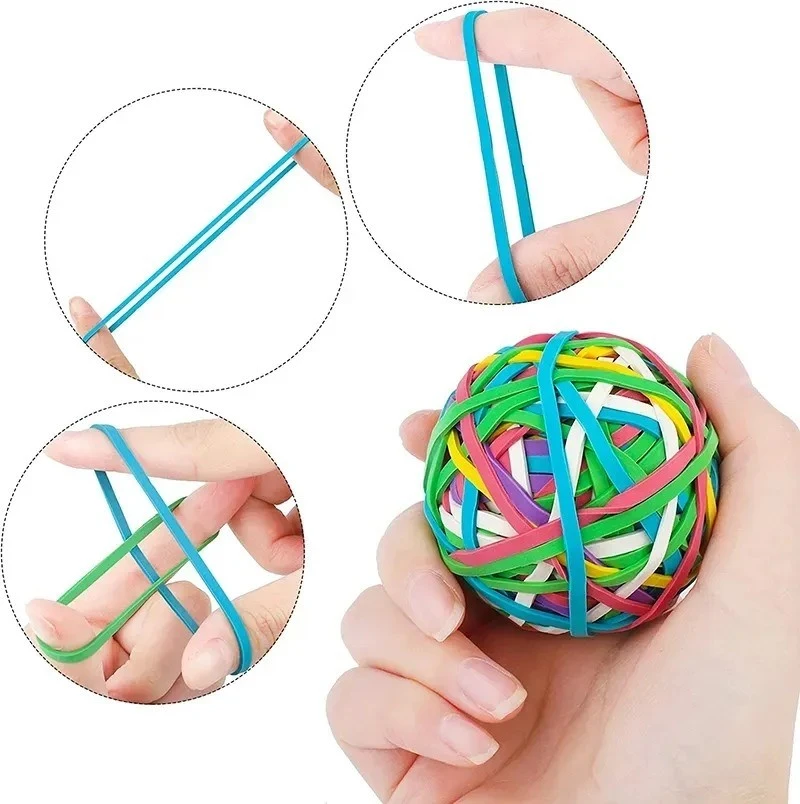

Testing the Shape Retention of Colored Rubber Bands
I've done some tests in my own workshop to see how different colored rubber bands perform after stretching. I took a few samples of natural and synthetic colored rubber bands and stretched them to different lengths.
I found that the natural rubber bands had a higher initial elasticity. They could stretch further than the synthetic ones. But after multiple stretches, the natural rubber bands started to show signs of wear. They became a bit looser and didn't return to their original shape as well as they did at first.
The synthetic rubber bands, on the other hand, were more consistent. They didn't stretch as far as the natural ones, but they maintained their shape better after multiple stretches. This shows that for long - term use, synthetic rubber bands might be a more reliable option.
If you're planning to use colored rubber bands for a project that requires repeated stretching, like making a Colored Rubber Band Ball, you might want to consider synthetic rubber bands.
Tips to Keep Colored Rubber Bands in Shape
If you want your colored rubber bands to last longer and keep their shape, here are some tips:
- Store them properly: Keep your colored rubber bands in a cool, dry place away from direct sunlight. A drawer or a plastic container is a good option.
- Don't over - stretch them: Try to use the right size of rubber bands for your needs. If you need to hold a large item, use multiple smaller bands instead of stretching one band too far.
- Clean them regularly: If your colored rubber bands get dirty, you can clean them with a mild soap and water. Just make sure to dry them thoroughly before storing them.
Buying Colored Rubber Bands in Bulk
If you're a crafter, a teacher, or a business owner, you might need to buy colored rubber bands in bulk. We offer Bulk Colored Rubber Bands at competitive prices. Buying in bulk not only saves you money but also ensures that you have enough rubber bands for your projects.
We have a wide range of colors and sizes to choose from. Whether you need small bands for jewelry making or large bands for packaging, we've got what you need. And we guarantee the quality of our products.
Conclusion
So, do colored rubber bands lose their shape after stretching? It depends on the type of rubber, the quality of manufacturing, the degree of stretching, and the environmental conditions. By choosing the right type of rubber bands and taking proper care of them, you can minimize the chances of them losing their shape.
If you're interested in our colored rubber bands, feel free to reach out for a purchase and negotiation. We're always happy to help you find the best products for your needs.
References
- "The Science of Rubber Elasticity" by L. R. G. Treloar
- "Rubber Technology Handbook" by Werner Hofmann