

As a supplier of large rubber bands, I often receive inquiries from customers about the performance of our products under various conditions. One question that comes up frequently is whether large rubber bands work well in cold weather. In this blog post, I'll delve into the science behind rubber's behavior in low temperatures, discuss the implications for our large rubber bands, and share some practical tips for using them in cold environments.
The Science of Rubber in Cold Weather
Rubber is a polymer, a material made up of long chains of molecules. These chains can move and stretch, which gives rubber its elasticity. However, when the temperature drops, the movement of these molecules slows down. As the molecules become less mobile, the rubber becomes stiffer and less flexible.
This change in molecular behavior is described by the glass transition temperature (Tg). The Tg is the temperature at which a polymer transitions from a rubbery, flexible state to a glassy, brittle state. For natural rubber, the Tg is typically around -70°C (-94°F). Synthetic rubbers can have different Tg values depending on their chemical composition.
When rubber is exposed to temperatures near or below its Tg, it loses its ability to stretch and return to its original shape. Instead, it becomes hard and may crack or break under stress. This is why rubber products, including large rubber bands, can become less effective in cold weather.
Performance of Our Large Rubber Bands in Cold Weather
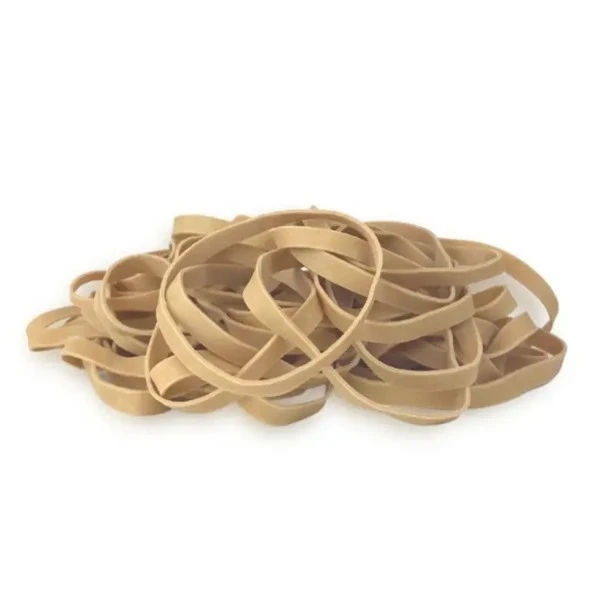
At our company, we offer a variety of large rubber bands, including Industrial-grade Durable Rubber Bands, Postal Rubber Bands, and Super Strong Rubber Bands. Each type of rubber band is made from high-quality materials designed to provide optimal performance in different applications.
Our industrial-grade durable rubber bands are made from a blend of natural and synthetic rubbers that offer excellent resistance to wear and tear. While they can withstand a wide range of temperatures, they may become stiffer in cold weather. However, as long as the temperature does not drop below their Tg, they should still be able to perform their intended function.
Postal rubber bands are designed for light-duty applications, such as bundling letters and packages. They are typically made from a softer rubber compound that is more flexible at room temperature. In cold weather, these rubber bands may lose some of their elasticity, but they should still be able to hold items together.
Our super strong rubber bands are engineered to provide maximum strength and durability. They are made from a high-performance synthetic rubber that has a lower Tg than natural rubber. This means that they can maintain their flexibility and strength in colder temperatures compared to other types of rubber bands.
Tips for Using Large Rubber Bands in Cold Weather
If you need to use large rubber bands in cold weather, here are some tips to help ensure their optimal performance:
- Choose the Right Type of Rubber Band: As mentioned earlier, different types of rubber bands have different temperature tolerances. If you know you'll be using the rubber bands in cold conditions, choose a type that is designed to withstand low temperatures, such as our super strong rubber bands.
- Store the Rubber Bands Properly: Keep the rubber bands in a warm place before use. This will help prevent them from becoming too cold and losing their flexibility. You can also store them in an insulated container or bag to keep them warm.
- Avoid Overstretching: In cold weather, rubber bands are more likely to break if they are overstretched. Be careful not to stretch the rubber bands beyond their recommended limit, especially when they are cold.
- Inspect the Rubber Bands Regularly: Check the rubber bands for signs of damage or wear before use. If you notice any cracks or breaks, replace the rubber bands immediately to avoid potential problems.
Conclusion
In conclusion, large rubber bands can work well in cold weather as long as you choose the right type of rubber band and take proper precautions. Our Industrial-grade Durable Rubber Bands, Postal Rubber Bands, and Super Strong Rubber Bands are all designed to provide reliable performance in a variety of conditions, including cold weather.
If you have any questions about our large rubber bands or need help choosing the right type for your application, please don't hesitate to contact us. We're here to help you find the best solution for your needs. Whether you're a small business owner, a postal worker, or an industrial manufacturer, we have the right rubber bands for you. Let's start a conversation about your requirements and explore how our products can meet your needs.

References
- "The Science of Rubber." Encyclopaedia Britannica.
- "Rubber Polymers." Polymer Science Learning Center.
- "Temperature Effects on Rubber Properties." Rubber Manufacturers Association.