

As a supplier of rubber band colors, I've been intrigued by the question of whether rubber band colors affect their biodegradability. This topic isn't just a matter of academic curiosity; it has real - world implications for both the environment and our business. In this blog post, I'll delve into the science behind rubber band biodegradability, explore how color might play a role, and discuss the potential impacts on our customers and the planet.
Understanding Rubber Band Biodegradability
Before we can discuss the impact of color, we need to understand what biodegradability means in the context of rubber bands. Biodegradability refers to the ability of a material to be broken down by natural processes, such as the action of microorganisms like bacteria and fungi. These microorganisms convert the material into simpler substances like water, carbon dioxide, and biomass.
Natural rubber, which is derived from the latex of rubber trees, is generally considered biodegradable. The long - chain polymers in natural rubber can be attacked by enzymes produced by microorganisms, gradually breaking the rubber down over time. However, the rate of biodegradation can vary depending on several factors, including environmental conditions (such as temperature, humidity, and the presence of oxygen) and the specific composition of the rubber.
Synthetic rubber, on the other hand, is often made from petroleum - based chemicals. These materials are typically more resistant to biodegradation because the chemical structures are more complex and less recognizable to natural microorganisms. Some synthetic rubbers may take decades or even centuries to break down in the environment.
The Role of Color in Rubber Bands
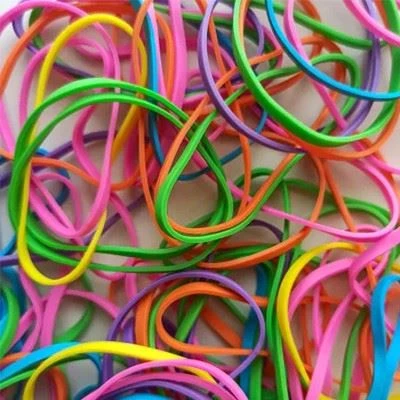
Now, let's turn our attention to the role of color in rubber bands. Rubber bands can come in a wide variety of colors, from basic black and white to vibrant Neon Colored Rubber Bands. The color is usually added to the rubber during the manufacturing process using pigments or dyes.
Pigments are insoluble particles that are dispersed throughout the rubber matrix, while dyes are soluble substances that dissolve in the rubber. The type of colorant used can have different effects on the biodegradability of the rubber band.

Pigments
Inorganic pigments, such as titanium dioxide (used for white rubber bands) and iron oxides (used for red and brown tones), are generally considered to be relatively inert. They don't significantly affect the chemical structure of the rubber and are unlikely to interfere with the biodegradation process. These pigments are stable compounds that are not easily broken down by microorganisms themselves, but they don't prevent the rubber from being attacked by enzymes.
Organic pigments, however, can be more complex. Some organic pigments are derived from natural sources, such as plant extracts, and may be biodegradable to some extent. Others are synthetic organic compounds, which can vary in their biodegradability. Some synthetic organic pigments may contain chemical groups that are resistant to microbial attack, potentially slowing down the biodegradation of the rubber band.
Dyes
Dyes are often more soluble in the rubber and can have a more direct interaction with the rubber matrix. Some dyes may form chemical bonds with the rubber polymers, which could potentially affect the ability of microorganisms to break down the rubber. Additionally, some dyes may contain heavy metals or other toxic substances that can inhibit the growth of microorganisms and thus slow down the biodegradation process.
Environmental Conditions and Biodegradability
It's important to note that the biodegradability of rubber bands, regardless of color, is highly dependent on environmental conditions. For example, rubber bands that are buried in soil will have a different rate of biodegradation compared to those exposed to sunlight and air.
In a soil environment, the presence of moisture, oxygen, and a diverse community of microorganisms can accelerate the biodegradation process. However, if the soil is too dry, too cold, or lacks the necessary microorganisms, the rubber band may degrade very slowly.
Sunlight can also play a role. Ultraviolet (UV) radiation can cause the rubber to break down through a process called photodegradation. This can lead to the formation of smaller polymer fragments that are more easily attacked by microorganisms. However, the effectiveness of photodegradation depends on the type of rubber and the amount of UV exposure.
Implications for Our Customers
As a supplier of rubber band colors, we understand that our customers are increasingly concerned about the environmental impact of the products they use. Many businesses, especially those in the Office Rubber Bands and packaging industries, are looking for more sustainable options.
If color does affect the biodegradability of rubber bands, it could influence our customers' purchasing decisions. For example, customers who are committed to reducing their environmental footprint may prefer to use rubber bands with natural or biodegradable colorants. On the other hand, customers who prioritize color intensity and durability may be willing to accept a lower level of biodegradability.
Our Approach as a Supplier
At our company, we are committed to providing our customers with accurate information about the environmental impact of our products. We work closely with our manufacturers to ensure that the colorants used in our rubber bands are as environmentally friendly as possible.
We are constantly researching and developing new colorants that are both biodegradable and meet the high - quality standards our customers expect. For example, we are exploring the use of natural pigments derived from plants and minerals, which are not only more sustainable but also offer unique color options.
We also offer a range of Poly Rubber Band products that are designed to be more biodegradable. These bands are made from a blend of natural and synthetic rubbers, with a focus on reducing the environmental impact without sacrificing performance.
Contact Us for Sustainable Rubber Band Solutions
If you're interested in learning more about our rubber band colors and their biodegradability, or if you have specific requirements for your business, we'd love to hear from you. We can provide you with detailed information about the environmental characteristics of our products and help you choose the right rubber bands for your needs.
Whether you're looking for neon - colored rubber bands for a creative project or office rubber bands for everyday use, we have the expertise and the products to meet your demands. Contact us today to start a conversation about sustainable rubber band solutions.
References
- "Biodegradation of Polymers: An Overview" by A. Albertsson, et al.
- "The Chemistry of Rubber and Rubber Products" by J. Morton - Jones.
- "Environmental Impact of Synthetic Polymers" by R. B. Seymour.