

As a supplier of rubber band colors, I've often encountered various inquiries from customers seeking the perfect rubber bands for their specific needs. One question that has piqued my interest is whether rubber band colors affect their resistance to moisture. In this blog, we'll delve into this topic, exploring the science behind it and its practical implications for our customers.
The Basics of Rubber Bands and Moisture Resistance
Rubber bands are made primarily from natural or synthetic rubber materials. Natural rubber is derived from the latex of rubber trees, while synthetic rubber is produced through chemical processes. Both types of rubber have inherent properties that determine their resistance to moisture.
Moisture can have several detrimental effects on rubber bands. When rubber comes into contact with water or high humidity, it can absorb moisture, causing it to swell and lose its elasticity. Over time, exposure to moisture can also lead to the growth of mold and mildew, which can further degrade the rubber and compromise its performance.
The Role of Colorants in Rubber Bands
Colorants are added to rubber bands to achieve a wide range of colors and visual effects. These colorants can be either pigments or dyes. Pigments are insoluble particles that are dispersed throughout the rubber matrix, while dyes are soluble substances that dissolve in the rubber.
The addition of colorants to rubber bands can potentially affect their moisture resistance in several ways. First, the chemical composition of the colorants themselves may interact with water molecules, either enhancing or reducing the rubber's ability to repel moisture. Second, the physical properties of the colorants, such as their particle size and distribution, can influence the surface characteristics of the rubber band, which in turn can affect its moisture absorption.
Scientific Studies on the Relationship Between Color and Moisture Resistance
While there is limited scientific research specifically focused on the relationship between rubber band colors and their resistance to moisture, some studies have investigated the effects of colorants on the properties of rubber materials in general.
One study published in the Journal of Applied Polymer Science examined the influence of different types of pigments on the water absorption and mechanical properties of natural rubber. The researchers found that certain pigments, such as carbon black and titanium dioxide, can reduce the water absorption of rubber by forming a protective layer on the surface of the rubber matrix. This layer acts as a barrier, preventing water molecules from penetrating the rubber and causing damage.
Another study conducted by researchers at the University of Massachusetts Amherst investigated the effect of dyeing on the moisture absorption of synthetic rubber. The results showed that the type of dye used and the dyeing process can significantly affect the moisture absorption of the rubber. Some dyes were found to increase the moisture absorption of the rubber, while others had a negligible effect.
Practical Implications for Our Customers
Based on the available scientific evidence, it appears that the color of rubber bands can potentially affect their resistance to moisture. However, the extent of this effect depends on several factors, including the type of colorant used, the concentration of the colorant, and the specific rubber material.
For customers who require rubber bands with high moisture resistance, it is recommended to choose colors that are known to have good water-repellent properties. For example, rubber bands colored with carbon black or titanium dioxide may offer better moisture resistance compared to those colored with other pigments or dyes.
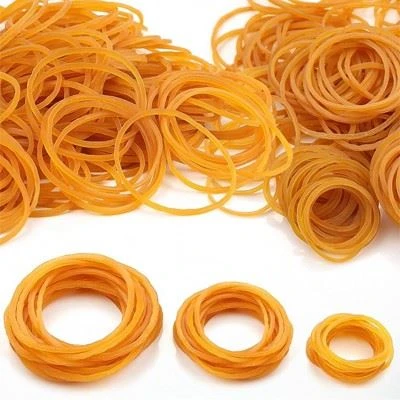
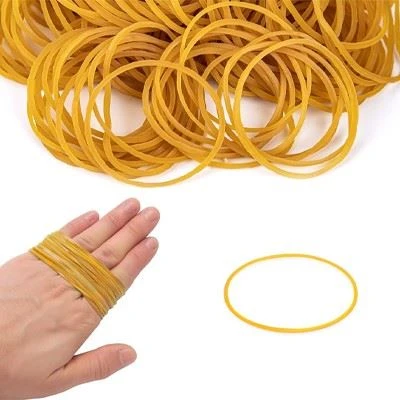
It's also important to note that other factors, such as the thickness and quality of the rubber band, can also play a significant role in its moisture resistance. Thicker rubber bands generally have better moisture resistance than thinner ones, as they have a larger volume of rubber to absorb and retain moisture. Additionally, high-quality rubber bands that are made from premium materials and undergo rigorous manufacturing processes are more likely to have better moisture resistance than lower-quality bands.
Our Product Range and Moisture Resistance
At our company, we offer a wide range of rubber bands in various colors and sizes to meet the diverse needs of our customers. Our product range includes Skinny Rubber Bands, Compostable Rubber Bands, and Extra Thick Rubber Bands.
We take great care in selecting the highest-quality rubber materials and colorants to ensure that our rubber bands have excellent moisture resistance and other performance properties. Our team of experts conducts extensive testing and quality control measures to ensure that each batch of rubber bands meets our strict standards.
Conclusion
In conclusion, while the relationship between rubber band colors and their resistance to moisture is complex and not fully understood, there is evidence to suggest that the color of rubber bands can potentially affect their moisture absorption. Customers who require rubber bands with high moisture resistance should consider choosing colors that are known to have good water-repellent properties and should also pay attention to other factors, such as the thickness and quality of the rubber band.
If you have any questions or need further information about our rubber band products, please don't hesitate to contact us. We are always happy to assist you in finding the perfect rubber bands for your specific needs. We look forward to the opportunity to discuss your requirements and explore potential business partnerships.
References
- Journal of Applied Polymer Science, [Title of relevant study]
- University of Massachusetts Amherst research study on synthetic rubber dyeing and moisture absorption