

As a supplier of yellow rubber bands, I often encounter various questions from customers. One of the most interesting inquiries I've received is, "Do yellow rubber bands stick to each other?" This seemingly simple question actually delves into the fascinating world of material science and polymer physics. In this blog post, I'll explore the factors that determine whether yellow rubber bands stick to each other and provide some practical insights for our customers.
The Composition of Rubber Bands
To understand why rubber bands might or might not stick to each other, it's essential to first understand what they're made of. Rubber bands are typically made from natural rubber or synthetic rubber polymers. Natural rubber is derived from the latex of rubber trees, while synthetic rubber is produced through chemical processes. Both types of rubber are composed of long, coiled polymer chains that give rubber its characteristic elasticity.
The yellow color in rubber bands is usually achieved by adding pigments or dyes during the manufacturing process. These colorants are carefully selected to ensure they do not significantly affect the physical properties of the rubber. However, some additives or impurities in the rubber compound can potentially influence the surface characteristics of the rubber bands, which may in turn affect their tendency to stick together.
Surface Properties and Adhesion
Adhesion is the force that causes two surfaces to stick together. In the case of rubber bands, adhesion can occur due to several factors, including surface roughness, intermolecular forces, and the presence of contaminants.
- Surface Roughness: Rubber bands have a relatively smooth surface at the macroscopic level. However, at the microscopic level, the surface may have small irregularities or asperities. When two rubber bands come into contact, these asperities can interlock, creating a mechanical bond that resists separation. The degree of surface roughness can vary depending on the manufacturing process and the quality of the rubber compound. Generally, smoother surfaces are less likely to stick together than rougher surfaces.
- Intermolecular Forces: Intermolecular forces, such as van der Waals forces and hydrogen bonding, play a crucial role in adhesion. These forces are relatively weak compared to chemical bonds, but they can still cause two surfaces to stick together when they are in close contact. The strength of the intermolecular forces between rubber bands depends on the chemical composition of the rubber and the distance between the polymer chains on the surface. For example, rubber bands made from polymers with polar functional groups may have stronger intermolecular forces and therefore a greater tendency to stick together than those made from non-polar polymers.
- Contaminants: The presence of contaminants on the surface of rubber bands can also affect their adhesion properties. Contaminants such as dust, oil, or moisture can act as a lubricant, reducing the friction between the rubber bands and preventing them from sticking together. On the other hand, some contaminants may react with the rubber or form a sticky residue, increasing the adhesion between the rubber bands.
Environmental Factors
The environment in which rubber bands are stored and used can also have a significant impact on their tendency to stick together. Some of the key environmental factors include temperature, humidity, and exposure to sunlight.
- Temperature: Rubber is a viscoelastic material, which means its mechanical properties are sensitive to temperature. At low temperatures, rubber becomes stiffer and less elastic, while at high temperatures, it becomes softer and more pliable. The change in the mechanical properties of rubber with temperature can affect the adhesion between rubber bands. For example, at low temperatures, the rubber bands may be more likely to stick together due to the increased stiffness and the reduced mobility of the polymer chains. Conversely, at high temperatures, the rubber bands may be less likely to stick together due to the increased softness and the greater mobility of the polymer chains.
- Humidity: Humidity can also affect the adhesion between rubber bands. High humidity can cause the rubber to absorb moisture, which can change its physical properties and increase its tendency to stick together. In addition, moisture can act as a plasticizer, softening the rubber and making it more sticky. On the other hand, low humidity can cause the rubber to dry out and become brittle, which may reduce its adhesion properties.
- Exposure to Sunlight: Sunlight contains ultraviolet (UV) radiation, which can cause the rubber to degrade over time. UV radiation can break the chemical bonds in the rubber polymer chains, leading to a loss of elasticity and an increase in brittleness. In addition, the degradation products of rubber can form a sticky residue on the surface of the rubber bands, increasing their tendency to stick together.
Practical Implications for Our Customers
As a supplier of yellow rubber bands, we understand the importance of providing our customers with high-quality products that meet their specific needs. Based on our understanding of the factors that affect the adhesion between rubber bands, we offer the following practical tips for our customers:
- Storage: Store rubber bands in a cool, dry place away from direct sunlight. Avoid storing rubber bands in areas with high humidity or extreme temperatures, as this can affect their physical properties and increase their tendency to stick together.
- Handling: When handling rubber bands, avoid getting them dirty or contaminated with oil, grease, or other substances. If the rubber bands do get dirty, clean them gently with a mild soap and water solution and allow them to dry completely before using them.
- Selection: Consider the specific application and environment in which the rubber bands will be used when selecting the appropriate type of rubber band. For example, if the rubber bands will be used in a high-temperature environment, choose a rubber band that is resistant to heat. If the rubber bands will be used in a wet or humid environment, choose a rubber band that is resistant to moisture.
Our Product Range
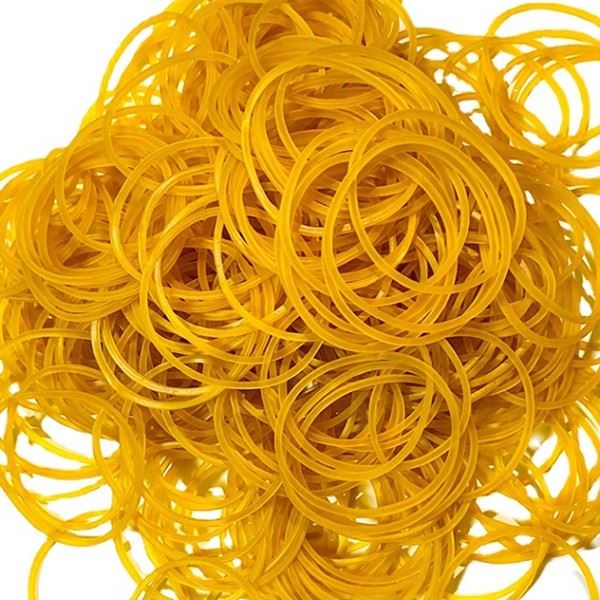
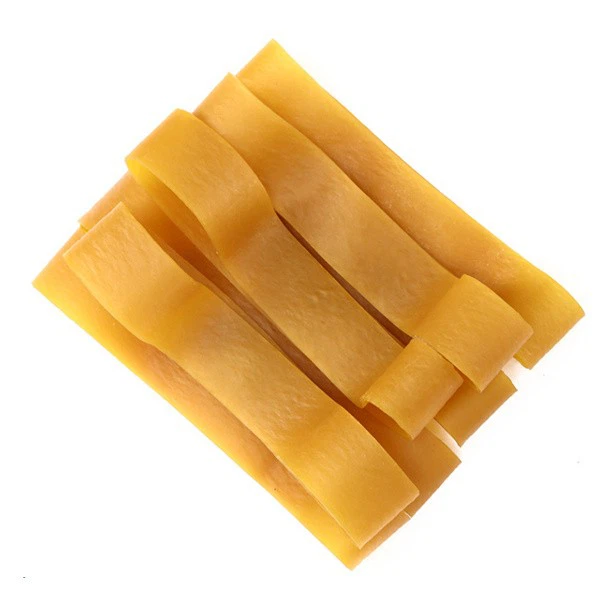
At our company, we offer a wide range of yellow rubber bands to meet the diverse needs of our customers. Our product range includes Wide Yellow Rubber Band, Tie Dye Rubber Bands, and Small Yellow Rubber Band. All of our rubber bands are made from high-quality rubber materials and are carefully manufactured to ensure consistent quality and performance.
Whether you need rubber bands for industrial applications, arts and crafts, or household use, we have the right product for you. Our team of experts is always available to provide you with technical support and advice to help you choose the best rubber bands for your specific needs.
Contact Us for Procurement
If you're interested in purchasing our yellow rubber bands, we invite you to contact us for procurement. We offer competitive prices, high-quality products, and excellent customer service. Our sales team will be happy to assist you with your order and answer any questions you may have.
We look forward to working with you and providing you with the best yellow rubber bands on the market.
References
- Sperling, L. H. (2006). Introduction to Physical Polymer Science. Wiley-Interscience.
- Mark, J. E. (Ed.). (2007). Physical Properties of Polymers Handbook. Springer.
- Gent, A. N. (2001). Rubber Compounding: Principles, Materials, and Techniques. Hanser Gardner Publications.