

Hey there! As a supplier of white rubber bands, I often get asked how they stack up against latex bands. So, I thought I'd dive into this topic and share some insights.
Let's start with the basics. Latex bands have been around for ages. They're made from natural rubber, which comes from the sap of rubber trees. This natural origin gives them some unique properties. They're super stretchy and have excellent elastic memory. That means they can stretch a whole lot and then bounce right back to their original shape. You've probably used latex bands to hold together stacks of papers or to tie up a bunch of cables. They're pretty much a staple in offices and households.
On the other hand, white rubber bands are a bit different. They can be made from a variety of materials, not just natural rubber. Some are synthetic, which means they're man - made. This gives us more control over their properties during the manufacturing process.
Appearance
One of the most obvious differences is the color. White rubber bands are, well, white! This can be a huge advantage in certain situations. For example, if you're using them for packaging or crafts where the look matters, white bands can give a clean, professional, and aesthetically pleasing appearance. You can check out our Big White Rubber Bands which are great for larger - scale packaging or decorative purposes.
In contrast, latex bands usually have a more yellowish - brownish tint. They might not look as nice if you're going for a sleek, modern look. So, if appearance is a key factor for you, white rubber bands are definitely the way to go.
Allergies
Another important aspect is allergies. Some people are allergic to latex. Latex contains proteins that can trigger allergic reactions in sensitive individuals. These reactions can range from mild skin irritation to more severe symptoms like difficulty breathing. This is a major drawback of latex bands, especially in environments where there's a risk of contact with people who have latex allergies, such as in hospitals or schools.
White rubber bands, especially the synthetic ones, are often hypoallergenic. They don't have those latex proteins, so they're a safer option for people with allergies. Our Biodegradable Eco - Friendly Rubber Bands are not only kind to the environment but also suitable for those with latex sensitivities.
Durability and Aging
When it comes to durability, both types have their pros and cons. Latex bands are known for their initial strength and elasticity. But over time, they can degrade. Exposure to sunlight, heat, and certain chemicals can cause them to become brittle and break. This is a common problem if you're storing latex bands for a long time or using them in harsh conditions.
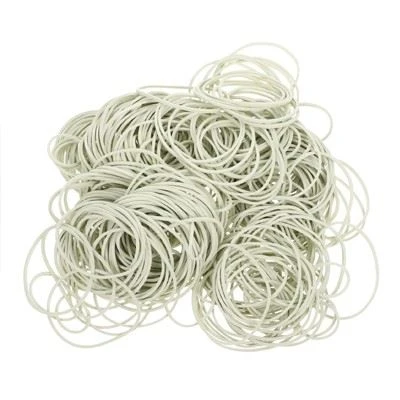

White rubber bands, especially the ones with anti - aging properties, can last longer. Our Anti Aging White Rubber Band is designed to resist the effects of aging. It can maintain its elasticity and strength for a much longer period, even when exposed to the elements. This makes them a better choice if you need bands that will last.
Cost
The cost is also a factor to consider. Latex bands are usually cheaper to produce because natural rubber is a widely available resource. However, when you factor in the potential costs associated with allergies (such as medical expenses if someone has a reaction) and the need to replace them more frequently due to aging, the overall cost might not be as low as it seems.
White rubber bands can vary in price depending on the material and the features. Synthetic white rubber bands can be more expensive to produce, but they offer better performance in terms of durability and allergy - friendliness. In the long run, they might actually be more cost - effective, especially if you're using them in high - volume or long - term applications.
Environmental Impact
In today's world, environmental impact is a big deal. Latex is a natural material, which means it's biodegradable. But the process of harvesting and processing latex can have a significant environmental footprint. It involves deforestation in some cases, and the use of chemicals in the processing can pollute the environment.
White rubber bands, especially the biodegradable ones, are a more eco - friendly option. Our biodegradable white rubber bands break down naturally over time, reducing waste and minimizing their impact on the environment. They're a great choice for businesses and individuals who are looking to be more sustainable.
Applications
The applications of these two types of bands also differ. Latex bands are commonly used in office settings for bundling papers, in hair styling, and in some industrial applications where elasticity is the main requirement.
White rubber bands, with their clean appearance and other advantages, are popular in the packaging industry. They can be used to secure packages, giving them a professional look. They're also great for crafts, such as making jewelry or creating decorative items. And in industries where allergies are a concern, like the food and medical industries, white rubber bands are the preferred choice.
Conclusion
So, to sum it up, white rubber bands and latex bands have their own unique features. If you're looking for a band with a great appearance, hypoallergenic properties, and better durability, white rubber bands are the way to go. They're also a more eco - friendly option in some cases. On the other hand, if you need a cheap, highly elastic band for basic applications and don't have to worry about allergies or long - term durability, latex bands might work for you.
If you're interested in purchasing white rubber bands for your business or personal use, I'd love to have a chat with you. We can discuss your specific needs and find the perfect solution for you. Whether you need big white rubber bands for packaging, biodegradable ones for a more sustainable approach, or anti - aging bands for long - term use, we've got you covered.
References
- "The Science of Rubber Materials" - A comprehensive guide on the properties and manufacturing of rubber products.
- "Allergy Research in Latex and Synthetic Rubbers" - A study on the allergic reactions associated with different types of rubber.
- "Environmental Impact of Rubber Production" - Research on how the production of natural and synthetic rubber affects the environment.