

Hey there! I'm with a natural rubber color supply business, and today I wanna chat about how the color of natural rubber changes with different antioxidants.
First off, let's talk a bit about natural rubber. Natural rubber is pretty amazing stuff. It comes from the latex of rubber trees, and it's got some great properties like high elasticity and good tear resistance. But one thing about natural rubber is that it's prone to oxidation. Oxidation can mess with its physical properties and, you guessed it, its color.
That's where antioxidants come in. Antioxidants are like little protectors for the rubber. They work by preventing or slowing down the oxidation process. And here's the cool part - different antioxidants can have different effects on the color of natural rubber.
Let's start with some common antioxidants. One of the most widely used antioxidants is N - isopropyl - N' - phenyl - p - phenylenediamine, often abbreviated as IPPD. This antioxidant is great at protecting the rubber from ozone and oxygen. When you add IPPD to natural rubber, it can cause the rubber to take on a bit of a yellowish tint over time. This is because as the antioxidant does its job, some of its reaction by - products can lead to this color change. It's not a super dramatic change, but it's noticeable, especially if you're comparing it to pure, un - protected natural rubber.
Another popular antioxidant is 2,2,4 - trimethyl - 1,2 - dihydroquinoline (TMQ). TMQ is a bit different. It's more effective at protecting the rubber from heat - induced oxidation. When used in natural rubber, TMQ can make the rubber turn a light brown color. This light brown shade can be quite appealing in some applications. For example, if you're making Light Brown Natural Rubber Bands, TMQ could be a great choice to achieve that desired color.
Now, let's consider the case of using no antioxidant at all. Pure natural rubber, without any antioxidant protection, is very susceptible to oxidation. Initially, it might have a milky - white or off - white color. But as it gets exposed to air, sunlight, and heat, it starts to oxidize rapidly. The rubber will gradually turn darker, often becoming a dark brown or even black in extreme cases. This color change is accompanied by a loss of elasticity and an increase in brittleness. So, while pure natural rubber might look nice at first, it doesn't age well. If you're interested in Pure Rubber Bands, you need to be aware of these limitations.
There are also some newer, more advanced antioxidants on the market. For example, some phenolic - based antioxidants are designed to provide long - term protection with minimal color change. These antioxidants work by scavenging free radicals that cause oxidation. When you use these phenolic antioxidants in natural rubber, the rubber can maintain a more natural, light - colored appearance for a longer time. This is great for applications where color stability is crucial, like in some high - end consumer products.
The choice of antioxidant also depends on the intended use of the natural rubber. If you're making Large Natural Rubber Bands for industrial use, you might be more concerned about the rubber's durability and less about its exact color. In this case, an antioxidant like IPPD or TMQ could be a good fit. But if you're making rubber products for the fashion or home decor industry, where color is a key factor, you'll want to choose an antioxidant that won't cause an unwanted color shift.

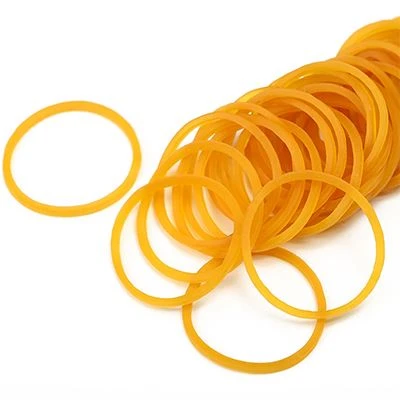
The amount of antioxidant you add also matters. If you add too little, the rubber won't be well - protected, and it will still oxidize and change color relatively quickly. On the other hand, if you add too much, it can lead to other problems. For example, an excessive amount of antioxidant can sometimes cause the rubber to become sticky or can affect its mechanical properties. So, finding the right balance is crucial.
When it comes to the manufacturing process, the way the antioxidant is incorporated into the natural rubber can also impact the color. If the antioxidant is not evenly dispersed throughout the rubber, you might end up with uneven color distribution. This can be a real issue, especially for products where a uniform color is required. Manufacturers need to use proper mixing techniques to ensure that the antioxidant is well - blended with the rubber.
In addition to the chemical properties of the antioxidants, environmental factors also play a role in the color change of natural rubber. For example, exposure to high humidity can accelerate the oxidation process, regardless of the antioxidant used. Sunlight can also have a significant impact. Ultraviolet (UV) rays in sunlight can break down the rubber and the antioxidants, leading to more rapid color change. So, if your natural rubber products are going to be used outdoors or in a high - sunlight environment, you'll need to choose an antioxidant that is more resistant to UV damage.
As a natural rubber color supplier, I've seen firsthand how different antioxidants can transform the look of natural rubber. It's really a fascinating area of study. Whether you're looking for a specific color for your rubber products or you just want to ensure that your rubber stays in good condition for as long as possible, choosing the right antioxidant is key.
If you're in the market for natural rubber products and you're interested in learning more about how antioxidants can affect the color, I'd love to have a chat with you. We can discuss your specific needs and find the best solution for your project. Whether it's for industrial, consumer, or artistic applications, we've got the knowledge and the products to help you achieve the perfect natural rubber color.
Don't hesitate to reach out and start a conversation about your natural rubber color requirements. We're here to assist you every step of the way.
References
- "The Chemistry of Rubber and Rubber Compounding" by John W. S. Hearle
- "Antioxidants in Polymer Degradation: Principles, Practical Applications" by Henning Zweifel