

Hey there! As a supplier of large rubber bands, I've been asked many times about the best way to test the strength of these bad boys. It's a crucial question, especially when you're relying on rubber bands to hold things together, whether it's for industrial use, household tasks, or any other application. So, let's dive right in and explore the different methods to test the strength of large rubber bands.
Why Testing Rubber Band Strength Matters
First off, why is it so important to test the strength of large rubber bands? Well, for starters, you want to make sure that the rubber bands you're using can handle the load you're putting on them. If you're using them in an industrial setting to secure heavy items, a weak rubber band could snap, causing damage to the items or even posing a safety risk. On the other hand, if you're using them for light household tasks, you don't want to overspend on overly strong rubber bands.
Testing the strength also helps in quality control. As a supplier, I need to ensure that the rubber bands I'm providing meet the required standards. By testing the strength, I can identify any batches that may not be up to par and take appropriate action.
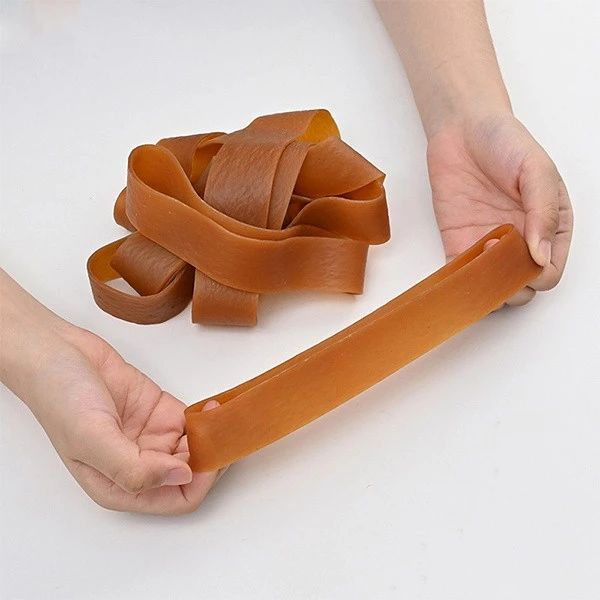
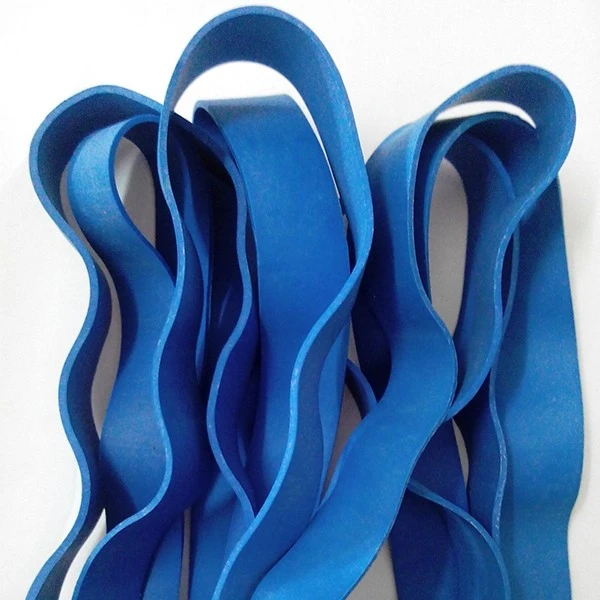
Different Methods to Test Rubber Band Strength
1. Tensile Testing
Tensile testing is one of the most common and reliable methods to test the strength of rubber bands. In this method, you apply a pulling force to the rubber band until it breaks. The maximum force the rubber band can withstand before breaking is its tensile strength.
To perform a tensile test, you'll need a few things:
- A tensile testing machine: This is a specialized piece of equipment that can apply a controlled pulling force to the rubber band. If you don't have access to a tensile testing machine, you can also use a simple setup with a pulley system and weights.
- A sample of the rubber band: Make sure the sample is representative of the batch you're testing.
- Measuring tools: You'll need a ruler or caliper to measure the length and width of the rubber band before and after the test.
Here's how you can perform a tensile test:
- Measure the initial length and width of the rubber band.
- Attach the rubber band to the tensile testing machine or the pulley system.
- Slowly apply a pulling force to the rubber band at a constant rate.
- Record the force applied and the elongation of the rubber band until it breaks.
- Calculate the tensile strength of the rubber band using the formula: Tensile strength = Maximum force / Cross-sectional area.
The cross-sectional area of the rubber band can be calculated by multiplying its width by its thickness.
2. Elongation Testing
Elongation testing is another important test to determine the strength of rubber bands. In this test, you measure how much the rubber band can stretch before it breaks. The elongation at break is an important indicator of the rubber band's flexibility and durability.
To perform an elongation test, you'll need the same equipment as for the tensile test. Here's how you can do it:
- Measure the initial length of the rubber band.
- Attach the rubber band to the tensile testing machine or the pulley system.
- Slowly apply a pulling force to the rubber band until it breaks.
- Measure the final length of the rubber band after it breaks.
- Calculate the elongation at break using the formula: Elongation at break = ((Final length - Initial length) / Initial length) x 100%.
A higher elongation at break indicates that the rubber band is more flexible and can withstand more stretching without breaking.
3. Fatigue Testing
Fatigue testing is used to determine how well the rubber band can withstand repeated stretching and relaxation cycles. This is important in applications where the rubber band will be used multiple times, such as in machinery or in packaging.
To perform a fatigue test, you'll need a fatigue testing machine or a setup that can apply repeated stretching and relaxation cycles to the rubber band. Here's how you can do it:
- Attach the rubber band to the fatigue testing machine or the setup.
- Set the machine to apply a specific number of stretching and relaxation cycles at a certain frequency.
- Monitor the rubber band for any signs of damage or failure during the test.
- After the test, inspect the rubber band for any visible signs of wear and tear.
If the rubber band shows signs of damage or failure after a relatively small number of cycles, it may not be suitable for applications that require repeated use.
Our Range of Large Rubber Bands
At our company, we offer a wide range of large rubber bands to suit different needs. Whether you're looking for Long Stretch Rubber Bands that can stretch a long way without breaking, Sturdy Rubber Bands that can hold heavy items securely, or Super Strong Rubber Bands for industrial applications, we've got you covered.
All our rubber bands are tested for strength using the methods described above to ensure that they meet the highest quality standards. We also offer custom-made rubber bands to meet your specific requirements.
Conclusion
Testing the strength of large rubber bands is essential to ensure their quality and suitability for different applications. By using methods such as tensile testing, elongation testing, and fatigue testing, you can accurately determine the strength of the rubber bands.
As a supplier, I'm committed to providing high-quality large rubber bands that meet your needs. If you're interested in purchasing our rubber bands or have any questions about testing their strength, please don't hesitate to contact us. We'd be happy to assist you in finding the right rubber bands for your application.
References
- ASTM D412 - Standard Test Methods for Vulcanized Rubber and Thermoplastic Elastomers - Tension
- ISO 37 - Rubber, vulcanized or thermoplastic - Determination of tensile stress - strain properties
So, what are you waiting for? Contact us today to discuss your rubber band needs and let's find the perfect solution for you!