

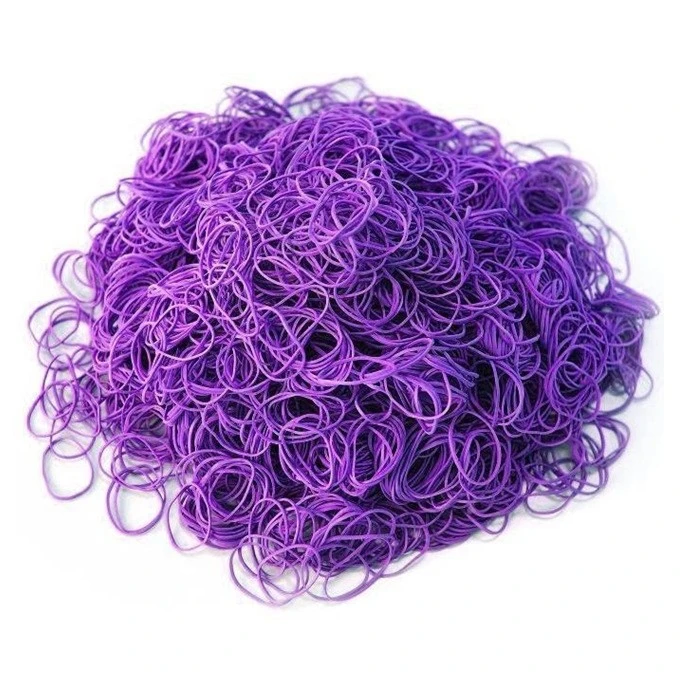
As a supplier of purple rubber bands, I often encounter inquiries about the tensile strength of these vibrant elastics. Tensile strength is a crucial property that determines the maximum amount of stress a rubber band can withstand before breaking. In this blog post, I will delve into the concept of tensile strength, explore the factors that influence it in purple rubber bands, and provide insights into how you can make informed decisions when purchasing these products.
Understanding Tensile Strength
Tensile strength is defined as the maximum stress that a material can endure while being stretched or pulled before it fractures. In the context of rubber bands, it represents the force required to break the band. This property is typically measured in units of force per unit area, such as pounds per square inch (psi) or newtons per square millimeter (N/mm²).
The tensile strength of a rubber band is influenced by several factors, including the material composition, manufacturing process, and dimensions of the band. Natural rubber, for example, is known for its high tensile strength and elasticity, making it a popular choice for rubber band production. Synthetic rubbers, such as neoprene and silicone, also offer excellent tensile properties and are often used in applications where specific performance characteristics are required.
Factors Affecting the Tensile Strength of Purple Rubber Bands
Material Composition
The type of rubber used in the production of purple rubber bands plays a significant role in determining their tensile strength. Natural rubber, derived from the latex of rubber trees, is known for its high elasticity and strength. It has a long polymer chain structure that allows it to stretch and return to its original shape without losing its integrity. Synthetic rubbers, on the other hand, are engineered to have specific properties, such as resistance to heat, chemicals, and abrasion. Depending on the application, synthetic rubbers may offer higher tensile strength or other desirable characteristics.
Manufacturing Process
The manufacturing process also affects the tensile strength of purple rubber bands. During the production process, the rubber is mixed with various additives, such as sulfur and accelerators, to enhance its properties. The curing process, which involves heating the rubber to a specific temperature for a set period of time, is crucial for developing the desired tensile strength. Improper curing can result in a rubber band with reduced strength and durability.
Dimensions
The dimensions of a purple rubber band, including its thickness, width, and length, also influence its tensile strength. Generally, thicker and wider rubber bands have higher tensile strength than thinner and narrower ones. However, the relationship between dimensions and tensile strength is not always linear, and other factors, such as the material composition and manufacturing process, must also be considered.
Measuring the Tensile Strength of Purple Rubber Bands
To determine the tensile strength of purple rubber bands, a tensile testing machine is typically used. This machine applies a gradually increasing force to the rubber band until it breaks, and the maximum force applied is recorded. The tensile strength is then calculated by dividing the maximum force by the cross-sectional area of the rubber band.
It is important to note that the tensile strength of purple rubber bands can vary depending on the testing conditions, such as the temperature, humidity, and rate of loading. Therefore, it is recommended to conduct tensile tests under standardized conditions to ensure accurate and comparable results.
Applications of Purple Rubber Bands with High Tensile Strength
Purple rubber bands with high tensile strength are used in a wide range of applications, including:
Industrial Applications
In industrial settings, purple rubber bands are often used for bundling, securing, and packaging products. Their high tensile strength ensures that they can withstand the rigors of handling and transportation without breaking. For example, in the manufacturing industry, purple rubber bands are used to bundle wires, cables, and other components together. In the logistics industry, they are used to secure pallets and packages during shipping.
Office and School Supplies
Purple rubber bands are also popular in office and school settings for organizing and binding documents. Their bright color makes them easy to identify, and their high tensile strength ensures that they can hold papers together securely. For example, in an office, purple rubber bands can be used to bundle reports, invoices, and other documents. In a school, they can be used to hold together notebooks, textbooks, and other study materials.
Arts and Crafts
Purple rubber bands are a versatile material for arts and crafts projects. Their high tensile strength allows them to be used in a variety of creative ways, such as making rubber band balls, bracelets, and jewelry. For example, in a craft project, purple rubber bands can be used to create a colorful and unique rubber band ball. In a jewelry-making project, they can be used to make a trendy and fashionable rubber band bracelet.
Choosing the Right Purple Rubber Bands for Your Application
When choosing purple rubber bands for your application, it is important to consider the following factors:
Tensile Strength
As discussed earlier, the tensile strength of purple rubber bands is a crucial property that determines their suitability for different applications. Make sure to choose rubber bands with a tensile strength that is appropriate for the specific task at hand. For example, if you need to bundle heavy items together, you will need rubber bands with high tensile strength. If you are using rubber bands for light-duty applications, such as organizing papers, you can choose rubber bands with lower tensile strength.
Material Composition
The material composition of purple rubber bands also affects their performance and durability. Consider the specific requirements of your application and choose rubber bands made from a material that is suitable for the environment and conditions in which they will be used. For example, if you need rubber bands that are resistant to heat and chemicals, you may want to choose synthetic rubber bands. If you prefer a more natural and eco-friendly option, you can choose rubber bands made from natural rubber.
Dimensions
The dimensions of purple rubber bands, including their thickness, width, and length, also play a role in their performance. Make sure to choose rubber bands with dimensions that are appropriate for the items you need to bundle or secure. For example, if you need to bundle thick cables together, you will need wider and thicker rubber bands. If you are using rubber bands for small items, such as pencils or pens, you can choose thinner and narrower rubber bands.

Conclusion
In conclusion, the tensile strength of purple rubber bands is an important property that determines their suitability for different applications. By understanding the factors that influence tensile strength and choosing the right rubber bands for your needs, you can ensure that your projects are successful and your products are secure. As a supplier of High Quality Purple Rubber Bands, I am committed to providing you with the highest quality products and excellent customer service. If you have any questions or need further information about our purple rubber bands, please do not hesitate to contact us for a consultation. We look forward to working with you and helping you find the perfect purple rubber bands for your application.
References
- ASTM D412 - Standard Test Methods for Vulcanized Rubber and Thermoplastic Elastomers - Tension
- ISO 37 - Rubber, vulcanized or thermoplastic - Determination of tensile stress - strain properties
- Rubber Handbook, 4th Edition, edited by Michael Morton