

Hey there! As a supplier of white rubber bands, I often get asked about the typical thickness of these handy little items. So, I thought I'd take a few minutes to chat about it and give you all the lowdown.
First off, let's talk about what we mean by "thickness." When we're talking about rubber bands, thickness usually refers to the cross - sectional diameter of the band. And the thickness can vary quite a bit depending on the intended use of the rubber band.
Thickness for Different Sizes and Types
Small White Rubber Bands
If you're looking at Small White Rubber Bands, these are often used for things like bundling small items, holding papers together, or in some craft projects. Typically, small white rubber bands have a thickness that ranges from about 0.03 inches (0.76 mm) to 0.06 inches (1.52 mm). This relatively thin thickness makes them flexible and easy to work with for delicate tasks. They're not too strong, but they're perfect for light - duty jobs. For example, if you're organizing a stack of business cards or keeping a few sheets of paper in place, a small white rubber band with a thinner profile will do the trick just fine.

Big White Rubber Bands
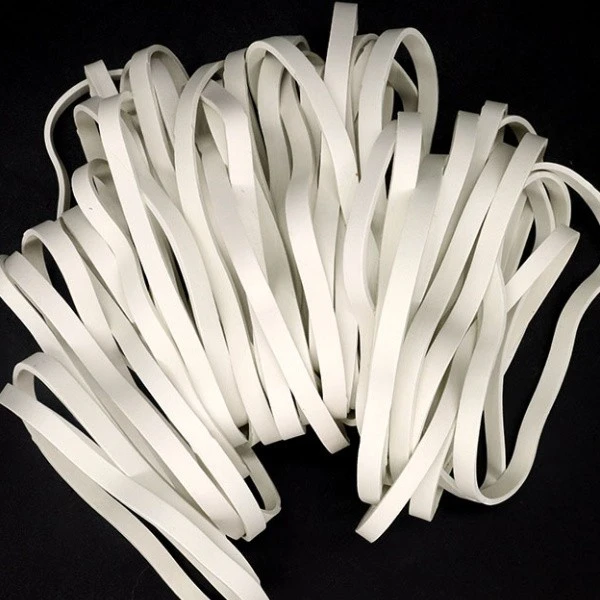
On the other hand, Big White Rubber Bands are designed for more heavy - duty applications. These might be used to secure large bundles of items, like stacks of magazines or even to hold together some larger craft materials. The thickness of big white rubber bands can range from around 0.08 inches (2.03 mm) to 0.12 inches (3.05 mm). The extra thickness gives them more strength and durability. You can stretch them further without breaking, and they can hold a lot more weight compared to their smaller counterparts. If you're in a shipping department and need to bundle up a large number of boxes or packages, a big white rubber band with a thicker cross - section is going to be your best bet.
Eco Rubber Bands
Now, let's talk about Eco Rubber Bands. These are becoming increasingly popular because they're made from more sustainable materials. The thickness of eco - friendly white rubber bands is similar to their non - eco counterparts. For small eco white rubber bands, you'll still see that 0.03 - 0.06 inches (0.76 - 1.52 mm) range, and for big ones, it's around 0.08 - 0.12 inches (2.03 - 3.05 mm). The main difference is in the materials used to make them, not the thickness. They're often made from natural rubber sources, which are more renewable and better for the environment.
Factors Affecting Thickness
There are a few factors that can affect the thickness of white rubber bands. One of the biggest factors is the manufacturing process. Different manufacturers might have slightly different techniques, which can result in variations in thickness. Some companies might use more precise machinery that can produce rubber bands with a very consistent thickness, while others might have a bit more variation.
The quality of the raw materials also plays a role. Higher - quality rubber materials are more likely to result in rubber bands with a consistent and appropriate thickness. If the rubber has impurities or is of a lower grade, it can lead to uneven thickness or a weaker band overall.
Another factor is the intended use. As I mentioned earlier, rubber bands designed for light - duty tasks are going to be thinner, while those for heavy - duty jobs are thicker. Manufacturers take this into account when they're making the rubber bands, so they can meet the specific needs of their customers.
Why Thickness Matters
The thickness of a white rubber band matters for a few reasons. First of all, it affects the strength of the band. A thicker rubber band can stretch further and hold more weight without breaking. This is crucial if you're using the rubber band for a task that requires a lot of tension, like securing a large bundle of items.
Thickness also affects flexibility. Thinner rubber bands are generally more flexible, which makes them easier to work with for delicate tasks. They can be bent and twisted without much effort, making them ideal for crafts or organizing small items.
In addition, the thickness can impact the durability of the rubber band. Thicker rubber bands tend to last longer because they're less likely to break or wear out quickly. This is especially important if you're using the rubber bands in a high - stress environment or for repeated use.
Custom Thickness Options
As a supplier, I understand that sometimes customers have very specific needs when it comes to the thickness of white rubber bands. That's why we offer custom - thickness options. If you have a unique application that requires a rubber band with a thickness that's not in our standard range, we can work with you to produce rubber bands that meet your exact specifications. Whether you need something even thinner for a super - delicate craft project or something much thicker for an industrial application, we've got you covered.
Conclusion
So, there you have it! The typical thickness of white rubber bands can vary depending on the size and type, with small ones usually ranging from 0.03 - 0.06 inches (0.76 - 1.52 mm) and big ones from 0.08 - 0.12 inches (2.03 - 3.05 mm). Eco rubber bands follow similar thickness ranges. The thickness is affected by factors like manufacturing processes, raw material quality, and intended use. And remember, we offer custom - thickness options if you need something special.
If you're in the market for white rubber bands, whether it's for your office, a craft project, or an industrial application, I'd love to have a chat with you. We can discuss your specific needs and find the perfect rubber bands for you. Don't hesitate to reach out and start the conversation! Let's find the right white rubber bands for your requirements.
References
- General knowledge of the rubber band industry
- Internal product specifications and manufacturing data