1. Background:Increasing Raw Material Costs Are Reshaping the Rubber Band Industry
In recent months, natural rubber prices have been continuously rising, putting significant pressure on the rubber band manufacturing industry.
Under this cost pressure, some suppliers have started to adopt risky practices to stay competitive, such as:
Using recycled rubber instead of virgin rubber
Reducing rubber content in formulations
Offering unusually low prices to secure orders, then delaying or failing to deliver
While these strategies may appear cost-effective in the short term, they often lead to serious issues in product quality, consistency, and supply stability.
2. Hidden Risks Behind Low-Cost Rubber Bands
If a quotation is significantly lower than the market average, buyers should proceed with caution. Common risks include:
1. Unstable Raw Materials
Low-cost suppliers may use inferior or recycled materials, resulting in:
Easy breakage
Poor elasticity
Short product lifespan
2. Unreliable Lead Time
During raw material shortages, low-price orders are often deprioritized, leading to:
Shipment delays
Partial deliveries
Order cancellations
3. Sample vs. Bulk Inconsistency
Initial samples may meet expectations, but mass production quality may drop due to cost-cutting.
3. What Does "Inconsistent Quality" Really Mean?
In a volatile market, quality issues often show up in the following ways:
Non-Standard Sizes and Specifications
Inconsistent thickness, width, or diameter across batches can affect packaging efficiency and machine compatibility.
01
Weak Tensile Strength and Poor Elasticity (Low Rubber Content)
Reducing natural rubber content may cause:
Bands to snap easily
Slow or incomplete rebound
Weak holding performance
02
Batch-to-Batch Inconsistency
Differences between production batches, such as:
Some batches too hard, others too soft
Fluctuating elasticity
Unstable performance in actual use
03
Artificial Weight Increase (Oil Treatment)
This can result in:
Oily surface and poor user experience
Contamination of packaged goods
Faster performance degradation over time
04
4. How to Identify a Reliable Rubber Band Supplier
In today's market, sourcing decisions should focus not only on price but also on supplier credibility and supply chain stability.
One key question to ask is:
👉 Is the supplier a real manufacturer or a trading company?
1. Why Working with a Real Manufacturer Matters
Many suppliers in the market are actually trading companies, sourcing from different factories.
In a stable market, this may work. But during supply fluctuations, risks increase:
Sourcing may switch from one factory to another
Quality becomes inconsistent
No control over production schedules
Higher risk of supply disruption
In contrast, a direct rubber band manufacturer typically offers:
Stable raw material sourcing
Consistent production processes
Better control over quality and lead time
2. How to Tell if You're Dealing with a Manufacturer
Here are a few practical ways to evaluate:
Ability to Explain Production Process
A real factory can clearly describe steps like mixing, milling, forming, and packaging.
Transparency of Production Information
Photos, videos, or details of machinery and workshop operations.
Technical Knowledge
A professional supplier should be able to discuss:
Tensile strength
Elasticity
Rubber content
Application-specific recommendations
Attitude Toward Lead Time and Risks
Reliable suppliers communicate proactively about raw material fluctuations and realistic delivery timelines.
3. Manufacturer vs. Trading Company: Key Differences
| Aspect | Manufacturer | Trading Company |
|---|---|---|
| Production | In-house | Outsourced |
| Supply Stability | High | Variable |
| Quality Control | Consistent | Depends on source |
| Cost Structure | More transparent | Includes markup |
| Risk Management | Proactive | Reactive |
4. Can Trading Companies Still Be Reliable?
Yes - but only if they have:
Stable, long-term factory partnerships
Strong quality control systems
However, in today's volatile market, it is generally safer to work with a verified rubber band manufacturer.
5. Key Advice: Prioritize Stability Over the Lowest Price
With ongoing fluctuations in rubber raw material costs, buyers should focus on:
Supply chain reliability
Consistent product quality
Long-term partnership potential
Instead of simply choosing the lowest price.
Because in reality, the cost of supply disruption or quality issues is often much higher than the initial savings.

6. Conclusion
Market volatility reveals the true strength of a supplier.
Choosing the right rubber band supplier is not just a purchasing decision - it's a strategic move to secure a stable and reliable supply chain.
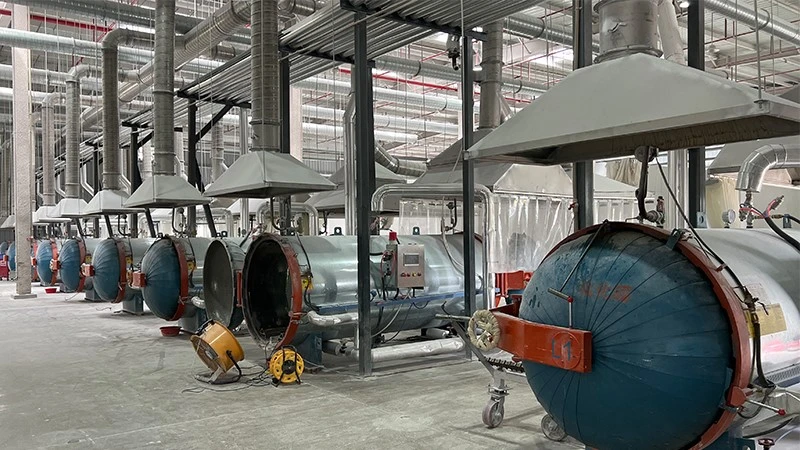
one-stop rubber band manufacturer in China
If you are looking for a reliable rubber band manufacturer with stable quality and consistent supply, feel free to reach out. We are happy to recommend suitable solutions based on your application and long-term needs.