

Rubber bands may look like a simple product, but anyone who has actually sourced them knows one thing very well:
Buying the right rubber bands is not as simple as it seems.
Over the years, I have followed the rubber band manufacturing industry closely and worked with buyers from different markets. I've seen many cases where problems didn't come from price-but from choosing the wrong supplier:
inconsistent elasticity, inaccurate weight, low rubber content, unstable batches, or products that fail food-grade requirements.
That is why I wrote this article.
In this post, I will share five rubber band factories in Asia that are truly worth knowing in 2026, based on real manufacturing capability-not marketing hype.
More importantly, I'll explain how buyers should evaluate rubber band factories to make better sourcing decisions.
Why Are Most Rubber Bands Manufactured in Asia?
Before listing factories, it's important to understand why Asia dominates global rubber band production.

Natural Rubber Supply Advantage
Natural rubber is mainly produced in Southeast Asia, especially Thailand, Malaysia, and Vietnam.
Factories located close to raw material sources benefit from:
More stable rubber quality
Better control of rubber content
Lower exposure to raw material price fluctuations
This is a key reason why many Western brands do not manufacture rubber bands locally.

Specialized Manufacturing Experience
Most Asian rubber band factories have:
10–30 years of focused production experience
Mature formulas, molds, and production lines
A deep understanding of elasticity, aging, and batch consistency
Many of these factories only make rubber bands, rather than producing many unrelated products.

Brand ≠ Manufacturer
A common misunderstanding among buyers is assuming that a "well-known brand" equals a factory.
In reality, many rubber band brands in Europe and North America outsource production to Asia.
The real quality, cost, and consistency are decided at the manufacturing level.
How Were These Top 5 Factories Selected?
This list is not based on Google rankings or advertising exposure.
I evaluated factories based on the following criteria:
✔️ Own manufacturing facilities (not trading-only companies)
✔️ Proven export experience
✔️ Stable rubber content and elasticity
✔️ Ability to customize size, color, packaging, and standards
✔️ Suitable for long-term cooperation, not one-off deals
Top 5 Rubber Band Factories in Asia (2026)
1️⃣ Daoak Rubber Band Factory (China)
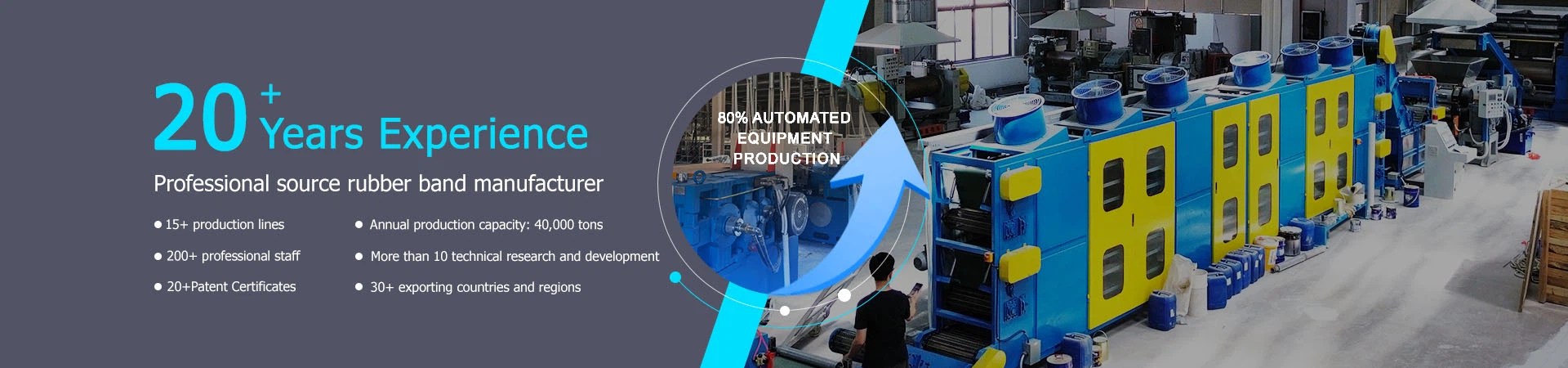
Daoak is a specialized rubber band manufacturer with a strong focus on export markets.
What makes Daoak stand out is not aggressive marketing, but manufacturing discipline.
Key strengths:
Dedicated rubber band production (not a mixed factory)
Honest weight and rubber content (no oil or powder added to increase weight)
Stable elasticity and consistent batch quality
Support for food-grade and eco-friendly rubber bands
Experienced in international compliance and export standards
Best suited for:
Rubber band wholesalers and distributors
Brands seeking long-term, stable supply
Buyers who value consistency over short-term low pricing
👉 If you are looking for a factory-direct partner with reliable quality, Daoak is a strong choice.
2️⃣ Wei Li Rubber Co., Ltd. (China Taiwan)
Taiwanese rubber product manufacturing is known for precision and consistency, and Wei Li is no exception.
Key strengths:
Long-term experience in rubber bands and elastic rubber products
Strict quality control and stable production processes
Wide range of standard specifications
Best suited for:
Buyers who prioritize quality stability
Industrial or standardized applications
Customers who prefer working with well-established manufacturers
3️⃣ Loi Loi Rubber Band Factory (Vietnam)
Loi Loi is one of the more recognized rubber band manufacturers in Vietnam with international export exposure.
Key strengths:
Use of natural rubber materials
Export experience across multiple regions
Flexible size and color options
Best suited for:
Buyers seeking Southeast Asian sourcing
Customers who value natural rubber origins
Medium to large volume orders
4️⃣ Chaiyo Inter Rubber Co., Ltd. (Thailand)
Thailand is one of the world's largest natural rubber producers, and Chaiyo benefits directly from this advantage.
Key strengths:
Close proximity to raw rubber sources
Rubber bands suitable for stationery, packaging, and general use
Factory-based production with stable supply
Best suited for:
Buyers who care about raw material origin
Standard rubber band specifications
Balanced requirements between price and natural rubber quality
5️⃣ Central Elastic Corporation (Malaysia)
Central Elastic is a long-established rubber band manufacturer with large-scale production capability.
Key strengths:
Decades of manufacturing experience
Broad product applications (industrial, agricultural, packaging)
Strong capacity for large, repeat orders
Best suited for:
High-volume, long-term procurement projects
Buyers prioritizing supply stability
Customers with limited customization needs
How to Choose the Right Rubber Band Factory for Your Business
From an industry perspective, buyers should focus on fit, not just price.
Understand Your Application
Rubber bands for:
1.Office & stationery
2.Food packaging
3.Agriculture or industrial use
Each application requires different rubber content, elasticity, odor control, and compliance standards.
01
Trial Orders vs. Long-Term Supply
1.Trial orders: flexibility and communication matter
2.Long-term supply: consistency matters more than the lowest price
Many sourcing problems appear only after the second or third shipment.
02
Ask the Right Questions (Not Just Price)
Instead of only asking "How much per kg?", ask:
1.How many pieces per kg?
2.What is the rubber content percentage?
3.Are oil or powder added?
4.Can samples or third-party tests be provided?
These questions reveal whether a supplier is transparent.
03
Factory vs. Trading Company
Factories: better cost control, customization, and consistency
Traders: flexible for small orders but less stable long-term
04
Rubber Band Industry Trends to Watch in 2026
🌱 Growing demand for eco-friendly and food-grade rubber bands
📦 Increasing need for private label and customized packaging
🤝 Buyers shifting toward long-term partnerships instead of spot buying
Final Thoughts
There is no such thing as "the best rubber band factory"-
only the right factory for your specific needs.
In this industry, the most reliable suppliers are often quiet, consistent, and focused on manufacturing-not marketing.
If this article helps you avoid one wrong decision in rubber band sourcing, then it has served its purpose.
Choosing the right factory is the first step toward stable supply, predictable cost, and long-term success.


