


What are the differences between rubber rings and latex rings?
Process difference: The rubber ring is formed by vulcanization in a vulcanizing tank after mixing and extrusion. Latex rings are generally formed by the impregnation process and high-temperature baking.
Functional difference: The elongation rate of latex rings is slightly higher than that of rubber rings, while the 300% fixed elongation force is less than that of rubber rings.
Latex rings are mainly used in daily life. Rubber rings are widely used in industry, mainly in mechanical seals!
The advantages of latex rings: wear-resistant, extremely strong stretching force, good binding effect, anti-aging, easy operation, time-saving, can be reused several times, and cost reduction.
The advantages of rubber rings: heat resistance, wear resistance, oil resistance, good waterproof sealing effect, and can withstand a pressure of up to 30MPa.
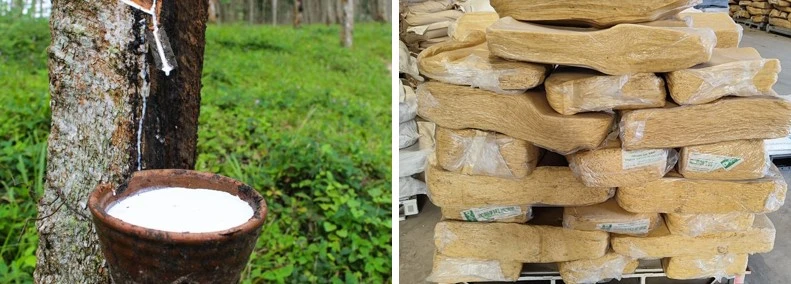
What are the differences in the production of rubber rings and latex rings and what are the differences in their finished products?
Natural latex is the liquid that flows out when rubber trees are tapped. It is milky white in color, with a solid content of 30% to 40% and an average rubber particle size of 1.06 microns. Fresh natural latex contains 27% to 41.3% rubber components (by mass), 44% to 70% water, and 0.2% to 4.5% protein.
Natural resin 2% - 5%, sugar 0.36% - 4.2%, ash 0.4%. To prevent natural latex from solidifying due to the action of microorganisms and enzymes, ammonia and other stabilizers are often added. Natural latex is mainly used for making sponge products, extruded products and impregnated products.
Natural rubber is a natural polymer compound with polyisoprene as its main component, with the molecular formula (C5H8)n. Its composition consists of 91% to 94% rubber hydrocarbons (polyisoprene), and the rest are non-rubber substances such as proteins, fatty acids, ash, and sugars.
Natural rubber is the most widely used general-purpose rubber.


