The elasticity of rubber bands may seem simple, but it is actually affected by a bunch of factors, some of which you may not even think of! Next, let's talk about these key points:
1.Core lifeline: degree of vulcanization
Vulcanization is a key chemical reaction in the manufacture of rubber bands. Sulfur forms cross-links between rubber molecular chains, changes the molecular structure of rubber and gives it high elasticity, strength and durability, and reduces permanent deformation.
Insufficient vulcanization: The rubber band is soft and will deform when pulled, and it can't go back, and the elasticity is poor.
Over-vulcanization: The molecular network is too tight, the rubber band will become hard and brittle, feel stiff when stretched, and have poor elasticity. It may break with a little force.
2.Raw materials: the "bloodline" and "physique" of rubber
High natural rubber content: Natural rubber is a natural jumping expert. The higher the content, the better the basic elasticity. The elasticity of rubber bands made of pure natural rubber is top-notch.
Too much synthetic rubber: In order to reduce costs or certain properties (such as oil resistance), synthetic rubber (such as styrene-butadiene rubber) will be added. The elasticity of synthetic rubber is usually not as good as that of natural rubber, and the overall elasticity will decrease if too much is added.
3.Time killer: aging and degradation
Ultraviolet exposure: Ultraviolet rays in sunlight are the "natural enemy" of rubber bands, and they are extremely destructive. After being exposed to the sun for a long time, the surface of the rubber band will crack and powder, become inelastic, and break at the touch.
Ozone corrosion: A trace amount of ozone in the air can also cause fine cracks on the surface of the rubber band (ozone cracking), affecting the strength and elasticity.
Heat aging: Long-term placement in a high temperature place will accelerate the breakage of the molecular chain and the destruction of the cross-linking structure, making the rubber band lose its elasticity faster.
4.Fatigue: Too much use will also make you "tired"
Rubber bands are not made of iron. Repeated tightening-relaxing-tightening will damage and break the molecular chain and cross-linking points little by little. The harder you stretch, the faster the rubber band will "get tired", and its elasticity will decrease, it will become loose, and finally break. Just like repeatedly bending a wire will break.
5.Size and shape
Thickness/width: Thick and wide rubber bands need to overcome greater internal friction when stretched, which makes them feel more "laborious" and may rebound a little slower, but they are usually more durable. Thin rubber bands feel more "sensitive".
Initial length/diameter: Small rubber bands made from the same batch of materials usually feel more "tight" and more elastic (relative stretch rate may be greater). But this is more of a subjective difference.
6. Related to the contact environment
If rubber bands are exposed to certain oils, solvents, and strong oxidizing substances for a long time, the rubber molecules may be dissolved, swollen, or chemically reacted, resulting in permanent damage and loss of elasticity.
Summary
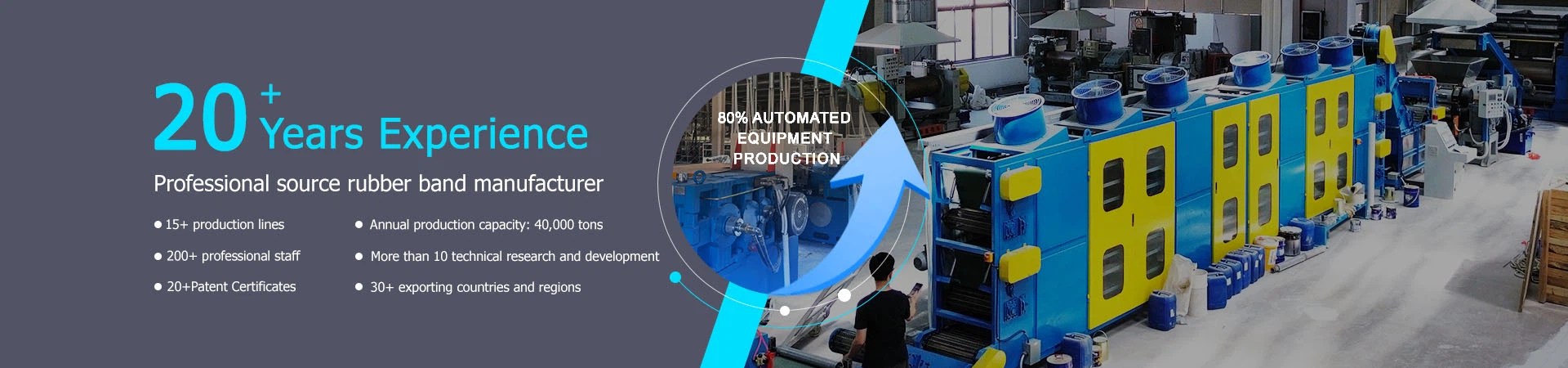
The elasticity of rubber bands depends on "birth" (vulcanization degree, raw material formula) for 70% and "acquired" (aging, temperature, fatigue, environment) for 30%. If you want elastic and durable rubber bands, it is important to choose the source manufacturer: Daoak Company is an industrial and trade enterprise integrating rubber product research and development, production, manufacturing and sales. The company has been deeply engaged in the research field of polymer materials for nearly 20 years, and has a number of patented technologies and self-developed formulas. The raw materials used in the production are natural rubber produced south of 15° north latitude, ensuring that the rubber bands produced have a long service life, good resilience, and are not easy to deform or break. They have the advantages of anti-aging, anti-corrosion, high temperature resistance, low temperature resistance, etc. The company's products have passed the ROHS indicator certification of SGS, do not contain various types of heavy metals and toxic substances that are prohibited by regulations, and are environmentally friendly and non-toxic. If you are looking for a reliable supplier, then daoak company is the best choice.