A Detailed Factory-Level Guide for Everyday Users and Professional Buyers
Rubber bands look simple. They're small, soft, stretchy, and cost almost nothing. Yet anyone who has worked in an office, packaging center, warehouse, farm, or school knows a frustrating fact:
Some rubber bands last a very long time, while others snap almost immediately.
If you've ever wondered why your rubber bands break-even when you're not pulling very hard-there is a scientific explanation. In fact, there are six major factors that affect how rubber bands stretch, how long they last, and how easily they fail.
This guide breaks down each factor in clear, practical language but with the deeper perspective of a rubber band manufacturer, so you understand the true reasons behind rubber band performance.
Whether you're choosing rubber bands for office supplies, packaging, agriculture, or industrial applications, this article will help you make smarter, longer-lasting choices.
Understanding Rubber Bands
What Is a Rubber Band? (Definition Explained Simply)
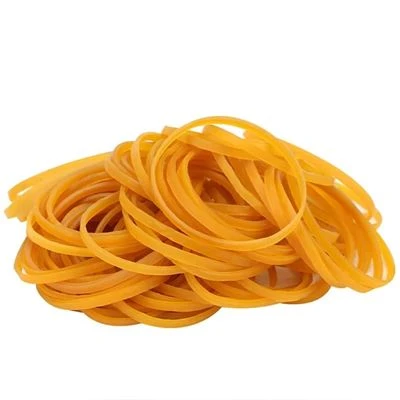
A rubber band is a loop made from elastic rubber that stretches when pulled and returns to its original shape when released. The key word here is elastic, which comes from the microscopic structure of rubber.
A rubber band is made of:
Long polymer chains (this gives flexibility)
Crosslinks that hold the chains together (this gives strength)
Additives like sulfur, pigments, antioxidants, stabilizers, and fillers
If any part of this balance is wrong, the rubber band becomes:
too weak
too stiff
too brittle
too soft
or too quick to age
The more you learn about these inner details, the easier it becomes to understand which rubber bands are truly good quality.
How Rubber Bands Actually Work (Simple Elasticity Science)
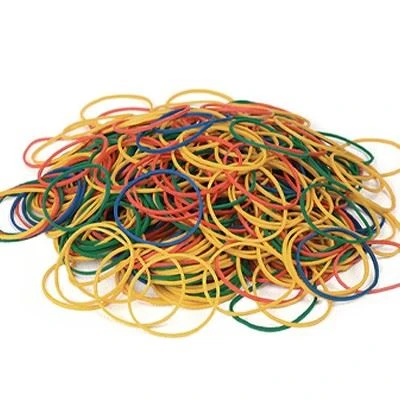
Rubber is like a spring made of long, tangled molecules.
When you stretch a rubber band:
The long molecules straighten out.
When you let go, the molecules snap back into their tangled shape.
The band returns to its original size.
This constant stretch-and-return process only works well if:
the molecules are strong
the rubber is well-cured
the formula is stable
and the band is not overstressed
When any of those conditions fail → the rubber band breaks.
The 6 Major Reasons Rubber Bands Break
1. Material Quality: The Foundation of Elasticity and Strength
Material quality is the number one reason rubber bands break.
If the raw materials are poor, no manufacturing process can save the product.
Natural Rubber: The Gold Standard
High-end rubber bands use natural rubber (NR) because it has:
excellent elasticity
superior stretch ratio
longer lifespan
high tensile strength
good rebound performance
Typical physical data for high-grade natural rubber bands:
Tensile strength: 18–25 MPa
Elongation: 500–700%
Hardness: Shore A 35–45
These are the numbers that separate "premium rubber bands" from cheap, fast-breaking ones.
What Happens in Low-Quality Material Bands
Cheaper rubber bands often contain:
too much filler (calcium carbonate, clay, etc.)
recycled rubber
low-grade latex
unstable pigments
These materials ruin performance by causing:
faster cracking
whitening during stretch
low elasticity
poor strength
early breakage
If your rubber band snaps even with light stretching, the material formula is almost always the cause.
2. Stretch Ratio: Using More Force Than the Band Can Handle
Most rubber bands break not because they are "bad," but because they are overstretched.
Every rubber band has a maximum elongation, and when you pass it, the molecules start to tear.
Typical safe stretch ranges:
High-quality natural rubber: 6×–8×
Standard rubber: 5×–6×
Recycled rubber: 2×–4×
That's why correct sizing matters.
If a rubber band is too small for the object, it is already 70–90% stretched before you even use it. That means the rubber band is at the edge of failure at all times.
Professional Rule (Used by Factories and Industrial Buyers)
Always choose a band that only needs 30–50% elongation during use.
This single rule can reduce breakage by over 50%.
3. Heat and Cold: Environmental Conditions That Destroy Rubber
Rubber is highly sensitive to temperature. Even the strongest rubber bands can fail if stored or used in the wrong environment.
High Temperatures
Heat accelerates the oxidation process, causing:
loss of elasticity
hardening
cracks
surface stickiness
color fading
faster aging
Rubber bands left in:
a hot warehouse
a delivery truck
a sunny car
or a room without air conditioning
will age much faster than expected.
In extreme heat, a rubber band can lose half of its lifespan.
Cold Temperatures
Cold makes rubber lose flexibility.
Below 5°C (41°F):
rubber becomes stiff
less elastic
more likely to snap instantly
If you operate in cold climates, choose rubber bands specifically designed for low-temperature flexibility.
4. UV Exposure: Sunlight Is Rubber's Silent Killer
Rubber is extremely vulnerable to UV light.
Sunlight breaks down rubber at a molecular level. This process, called photo-oxidation, causes:
cracking
brittleness
loss of color
reduced elasticity
premature snapping
This is why outdoor users-farmers, gardeners, seafood packers, parcel couriers-prefer black rubber bands.
Black rubber bands contain carbon black, a pigment that blocks UV light and dramatically slows aging.
For outdoor environments, we especially recommend:
👉 Big Black Rubber Bands
5. Poor Manufacturing: When the Factory Process Is the Problem
Many people think rubber bands are simple to make.
But producing consistent elasticity, correct hardness, and long lifespan requires strict factory control.
As a long-term rubber band manufacturer
1. Mixing (Formula Accuracy)
Rubber, sulfur, accelerators, antioxidants, stabilizers, and pigments must be mixed with:
precise temperature
correct timing
high shear mixing equipment
If mixing is uneven:
the band will have weak spots
color becomes inconsistent
stretch performance varies
breaking rate increases
2. Vulcanization (Curing Process)
This is the MOST important step.
Ideal curing conditions:
135–145°C
25–40 minutes
Under-cured rubber = soft, sticky, weak
Over-cured rubber = stiff, brittle, plastic-like
Only good factories carefully monitor these conditions.
3. Cutting Precision
Rubber tubing must be sliced into bands with exact control.
Poor cutting causes:
uneven band width
sharp internal edges
weak lines
inconsistent tension
Good factories use micro-adjusted cutting machines to maintain stability.
4. Drying and Aging Treatment
If drying is too fast → internal cracks
If drying is too slow → rubber becomes soft or molds
This is why professional factories use long drying tunnels with zone control.
6. Wrong Rubber Band for the Job
Even the strongest rubber band will fail if used incorrectly.
Example: Office vs Outdoor
Office bands are soft and light.
They are not built for:
heat
sun
heavy loads
high tension packaging
Example: Small Band, Large Object
If the diameter is too small, the band starts in a fully stretched state.
This increases stress dramatically and reduces lifespan.
Example: Thin Band for Heavy Load
Thin rubber bands are good for paper, but not for:
large bundles
packaging
industrial binding
agriculture
items with weight
For heavier workloads, choose wide or thick bands.
Recommended Rubber Bands for Different Applications
1. Large White Rubber Bands
Ideal for:
offices
document bundling
stationery use
2. Brown Rubber Bands
Ideal for:
packaging
warehouse operations
logistics
general bundling
3. Small Brown Rubber Bands
Ideal for:
small-item bundling
retail packing
grocery produce
light packaging
4. Big Black Rubber Bands
Ideal for:
agriculture
outdoor use
high-temperature environments
UV-heavy exposure
Benefits of Choosing High-Quality Rubber Bands
1. Longer Lifespan
Premium materials + premium curing = much slower aging.
2. Greater Elasticity
High stretch without whitening or cracking.
3. Better Appearance and Feel
Uniform color, soft texture, smooth surface.
4. Higher Value Over Time
A durable band costs more upfront but fails far less.
5. More Reliable for Professional Use
Especially important for packaging, logistics, and agriculture.
A reliable rubber band manufacturer ensures all these advantages.
FAQ: Common Questions About Rubber Band Breakage
1. Why do rubber bands turn white when stretched?
Because the polymer chains are being pulled apart. Whitening is the first sign of structural weakness.
2. Why do rubber bands get sticky over time?
Heat and oxygen break down rubber molecules, turning the surface into a sticky layer.
3. Are black rubber bands stronger?
Yes-at least outdoors.
Carbon black improves UV resistance and durability.
4. How should I store rubber bands to make them last longer?
Keep in a cool room
Avoid sunlight
Use sealed bags
Keep humidity moderate
5. Why do some rubber bands b reak even when new?
Usually because the factory added too much filler or didn't cure the rubber properly. Choosing a trusted rubber band manufacturer avoids this issue.
Final Thoughts
Rubber bands break for predictable reasons-material quality, stretch ratio, heat, cold, UV, manufacturing issues, or wrong usage. But once you understand these factors, you can choose better products and avoid unnecessary breakage.