

Are little rubber bands water-resistant? This is a question that many of us, especially those in need of reliable binding solutions, often ponder. As a supplier of Little Rubber Bands, I've delved deep into the properties of these small yet mighty items to provide you with a comprehensive answer.
Understanding Rubber Bands
Before we jump into the water-resistance aspect, let's first understand what rubber bands are made of. Most rubber bands are crafted from natural rubber, which is derived from the latex of rubber trees. Natural rubber is known for its elasticity, flexibility, and durability. It can stretch up to several times its original length and then snap back into shape without losing its integrity.
However, not all rubber bands are created equal. There are different types of rubber bands available in the market, each with its own unique characteristics. For instance, we offer Ultra-micro Rubber Bands, which are incredibly tiny and perfect for delicate tasks. These ultra-micro bands are often used in jewelry making, model building, and other precision work.
On the other hand, Small Wide Rubber Bands provide a wider surface area for binding. They are great for holding together stacks of papers, bundling cables, or securing items in place. Their wider design distributes the tension evenly, reducing the risk of breakage.
And then there are Small Fat Rubber Bands, which are thicker and more robust. These fat bands are ideal for heavy-duty applications where a strong hold is required. They can withstand more pressure and are less likely to snap under stress.
The Science of Water Resistance
Now, let's get to the heart of the matter: are little rubber bands water-resistant? The short answer is yes, to some extent. Natural rubber has a certain degree of water resistance due to its molecular structure. The long chains of polymers in rubber are tightly packed together, creating a barrier that prevents water from easily penetrating the material.
When a rubber band comes into contact with water, the water molecules are repelled by the non-polar nature of the rubber. This means that water tends to bead up on the surface of the rubber band rather than being absorbed. As a result, the rubber band can maintain its shape and elasticity even when wet.
However, it's important to note that the water resistance of rubber bands is not absolute. Prolonged exposure to water can still have an impact on their performance. Over time, water can seep into the rubber and cause it to swell. This swelling can weaken the rubber band, making it more prone to breakage. Additionally, if the water contains chemicals or contaminants, it can further degrade the rubber and reduce its lifespan.
Factors Affecting Water Resistance
Several factors can influence the water resistance of little rubber bands. One of the most significant factors is the quality of the rubber. High-quality rubber bands are typically made from purer natural rubber and are treated with additives to enhance their water resistance. These bands are more likely to withstand prolonged exposure to water without losing their properties.
The thickness of the rubber band also plays a role. Thicker rubber bands generally have better water resistance than thinner ones. This is because the extra material provides an additional layer of protection against water penetration.
Another factor to consider is the environment in which the rubber bands are used. If the rubber bands are exposed to extreme temperatures, sunlight, or chemicals, their water resistance can be compromised. For example, UV rays from the sun can break down the rubber over time, making it more vulnerable to water damage.
Testing the Water Resistance of Rubber Bands
To determine the water resistance of our little rubber bands, we conduct a series of tests in our laboratory. One of the most common tests is the immersion test. In this test, we submerge the rubber bands in water for a specified period of time and then observe their performance.

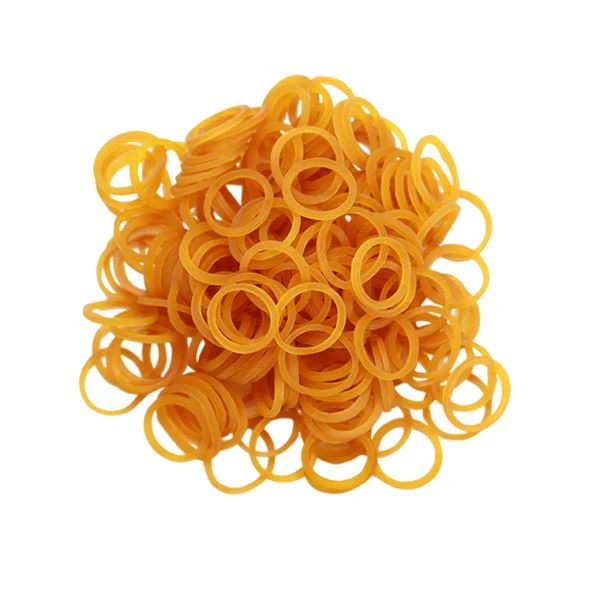
We measure the changes in the rubber bands' dimensions, elasticity, and strength before and after the immersion. If the rubber bands show minimal changes in these properties, it indicates that they have good water resistance.
We also perform a water spray test to simulate real-world conditions. In this test, we spray water on the rubber bands at different pressures and angles to see how they hold up. This helps us evaluate the rubber bands' ability to repel water and maintain their integrity in wet environments.
Practical Applications of Water-Resistant Rubber Bands
The water resistance of little rubber bands makes them suitable for a wide range of applications. In the household, they can be used to secure items in the bathroom, kitchen, or laundry room. For example, you can use a rubber band to keep a shower curtain in place or to bundle up wet towels.
In the office, water-resistant rubber bands are great for organizing and protecting documents. You can use them to hold together stacks of papers or to seal envelopes. Their water resistance ensures that the papers remain dry and intact, even if they come into contact with a little moisture.
In the industrial sector, rubber bands are used in a variety of applications where water resistance is crucial. They can be used to secure hoses, cables, and other components in wet or humid environments. For example, in the automotive industry, rubber bands are used to seal gaskets and prevent water from leaking into the engine.
Conclusion
In conclusion, little rubber bands do have a certain degree of water resistance. Their natural rubber composition and molecular structure allow them to repel water and maintain their shape and elasticity when wet. However, their water resistance is not absolute, and prolonged exposure to water can still have an impact on their performance.
As a supplier of Little Rubber Bands, we are committed to providing high-quality products that meet the needs of our customers. Our Ultra-micro Rubber Bands, Small Wide Rubber Bands, and Small Fat Rubber Bands are all tested for water resistance to ensure that they can withstand various conditions.
If you're in the market for reliable and water-resistant rubber bands, we invite you to contact us for a consultation. Our team of experts can help you choose the right rubber bands for your specific application and provide you with the best possible solutions.
References
- "The Properties and Applications of Natural Rubber." Rubber World Magazine.
- "Testing the Water Resistance of Elastomers." Journal of Materials Science.
- "Industrial Uses of Rubber Bands." Manufacturing Today.