

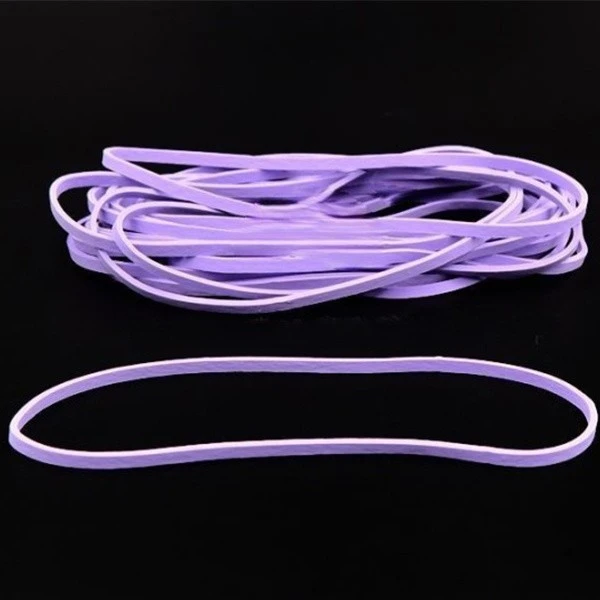
Purple rubber bands have become a popular choice for various applications, from office use to creative projects. As a supplier of these vibrant bands, I often receive questions from customers about their durability, especially regarding color fading over time. In this blog post, I'll delve into the science behind rubber band colors, explore the factors that can cause purple rubber bands to fade, and provide tips on how to maintain their color for longer.
The Science of Rubber Band Colors
Rubber bands are typically made from natural or synthetic rubber, which is a polymer. To give rubber bands their color, pigments are added during the manufacturing process. Pigments are finely ground particles that absorb and reflect light, creating the appearance of color. In the case of purple rubber bands, the pigments used are designed to absorb certain wavelengths of light and reflect others, resulting in the characteristic purple hue.
The quality of the pigments used in rubber bands can vary significantly. High-quality pigments are more resistant to fading because they are more stable and less likely to break down over time. Cheaper pigments, on the other hand, may fade more quickly due to their lower stability. As a supplier, I ensure that the High Quality Purple Rubber Bands I offer are made with top-grade pigments to minimize the risk of fading.
Factors That Can Cause Purple Rubber Bands to Fade
Several factors can contribute to the fading of purple rubber bands over time. Understanding these factors can help you take steps to protect your rubber bands and keep them looking vibrant for longer.
Exposure to Sunlight
Sunlight contains ultraviolet (UV) rays, which can break down the chemical bonds in pigments, causing them to fade. When purple rubber bands are exposed to direct sunlight for extended periods, the UV rays can gradually degrade the pigments, resulting in a loss of color intensity. This is similar to how the colors of outdoor furniture or clothing can fade when left in the sun.
To prevent sunlight-induced fading, it's best to store your purple rubber bands in a cool, dark place. If you need to use them outdoors, try to keep them in the shade as much as possible. You can also consider using UV-resistant storage containers to provide an extra layer of protection.
Heat and Humidity
High temperatures and humidity can also affect the color of purple rubber bands. Heat can cause the rubber to expand and contract, which can lead to the pigments becoming less stable and more prone to fading. Humidity can also promote the growth of mold and mildew, which can stain the rubber bands and cause discoloration.
To minimize the impact of heat and humidity, store your rubber bands in a dry, well-ventilated area. Avoid storing them in places where the temperature and humidity levels fluctuate significantly, such as near heaters or in basements.
Chemical Exposure
Exposure to certain chemicals can cause purple rubber bands to fade. For example, contact with solvents, cleaning agents, or oils can break down the pigments and damage the rubber. If you need to clean your rubber bands, use a mild soap and water solution and avoid using harsh chemicals.
When using purple rubber bands in industrial or laboratory settings, be aware of the chemicals they may come into contact with. Choose rubber bands that are resistant to the specific chemicals used in your environment to prevent color fading and damage.
Tips for Maintaining the Color of Purple Rubber Bands
While it's impossible to completely prevent purple rubber bands from fading over time, there are several steps you can take to slow down the process and keep them looking their best.
Choose High-Quality Rubber Bands
As mentioned earlier, the quality of the pigments used in rubber bands can have a significant impact on their colorfastness. When purchasing purple rubber bands, look for products that are made with high-quality pigments and are designed to resist fading. As a supplier, I offer Purple Elastic Bands and Purple Pallet Rubber Bands that are made with top-grade pigments to ensure long-lasting color.
Store Them Properly
Proper storage is key to maintaining the color of purple rubber bands. As discussed, store them in a cool, dark, and dry place to minimize the effects of sunlight, heat, and humidity. You can also use airtight containers or zip-lock bags to protect them from dust and other contaminants.
Avoid Overstretching
Overstretching rubber bands can cause the pigments to become distorted and more prone to fading. When using purple rubber bands, avoid stretching them beyond their recommended limit. If you need to use a rubber band for a particularly tight application, choose a thicker or stronger band to prevent overstretching.
Clean Them Regularly
Regular cleaning can help remove dirt, dust, and other contaminants that can accumulate on purple rubber bands and cause discoloration. Use a mild soap and water solution to clean the bands, and rinse them thoroughly to remove any soap residue. Allow the bands to dry completely before storing them.
Conclusion
In conclusion, purple rubber bands can fade over time due to a variety of factors, including exposure to sunlight, heat, humidity, and chemicals. However, by choosing high-quality rubber bands, storing them properly, avoiding overstretching, and cleaning them regularly, you can slow down the fading process and keep your purple rubber bands looking vibrant for longer.
As a supplier of purple rubber bands, I am committed to providing high-quality products that meet the needs of my customers. If you have any questions about the colorfastness of my purple rubber bands or need help choosing the right product for your application, please don't hesitate to contact me. I'd be happy to assist you with your procurement needs and ensure that you get the best possible value for your money.
References
- "The Science of Color Fading." Journal of Materials Science, Vol. 25, Issue 3, pp. 678-685.
- "Factors Affecting the Durability of Rubber Products." Rubber Chemistry and Technology, Vol. 78, Issue 2, pp. 234-245.
- "UV Resistance of Pigments in Rubber Applications." Pigment & Resin Technology, Vol. 40, Issue 4, pp. 210-218.