

Hey there! As a supplier of red rubber bands, I often get asked if there's a standard size for these handy little things. Well, let me tell you, it's not as straightforward as you might think.
First off, red rubber bands come in all shapes and sizes, and that's because they're used for a wide variety of purposes. Whether you're bundling up papers, securing items in a craft project, or even using them for some creative DIY, there's a red rubber band out there to fit the bill.
Let's start by talking about the different types of red rubber bands we offer. We've got Newspaper Rubber Bands, which are great for, you guessed it, bundling newspapers. These are usually on the thinner side, with a smaller diameter, so they can easily wrap around a stack of papers without taking up too much space. They're also flexible enough to stretch around the papers and hold them together securely.
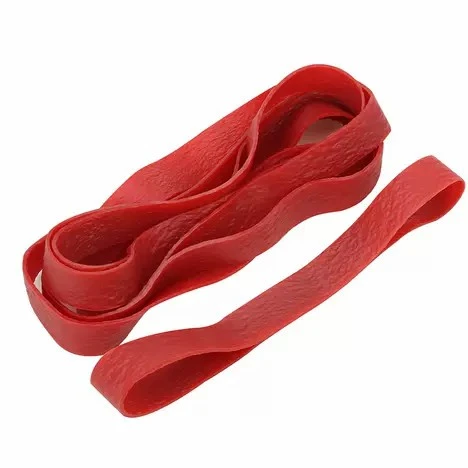
Then there are Thick Red Rubber Bands. These bad boys are designed for heavy-duty tasks. If you need to secure something that's a bit bulkier or needs a stronger hold, thick red rubber bands are the way to go. They have a larger diameter and more elasticity, which means they can stretch further and hold more weight without breaking.
And let's not forget about Wide Red Rubber Bands. These are perfect for applications where you need a wider surface area of contact. For example, if you're using them to hold together a large stack of fabric or a bundle of cables, wide red rubber bands will distribute the pressure more evenly, reducing the risk of damage to the items being held.
Now, back to the question of a standard size. The truth is, there isn't really a one-size-fits-all standard for red rubber bands. Different industries and applications have their own preferences and requirements when it comes to size. For instance, the newspaper industry might have a general preference for a certain size of rubber band that works best for bundling their papers, but that size might not be suitable for a craft store or a manufacturing facility.
However, there are some common sizes that you'll often see in the market. These sizes are typically measured in terms of length, width, and thickness. The length of a rubber band refers to the distance around the outside of the band when it's in its relaxed state. The width is the measurement across the band, and the thickness is the measurement of how thick the band is.
For example, a common size for newspaper rubber bands might be around 3 inches in length, 1/8 inch in width, and 1/32 inch in thickness. This size is small enough to be practical for bundling papers, but it still has enough stretch and strength to hold them together.
On the other hand, thick red rubber bands might be 6 inches in length, 1/4 inch in width, and 1/16 inch in thickness. These larger dimensions give them the strength and durability needed for heavy-duty applications.
Wide red rubber bands, as you might expect, have a larger width. A typical size for wide red rubber bands could be 4 inches in length, 1/2 inch in width, and 1/32 inch in thickness. This wider width allows them to provide a more secure hold on larger items.
It's also important to note that the size of a red rubber band can affect its performance. A rubber band that's too small might not be able to stretch around the items you're trying to bundle, while a rubber band that's too large might not provide enough tension to hold them together. That's why it's crucial to choose the right size for your specific needs.
When it comes to manufacturing red rubber bands, there are certain standards and regulations that manufacturers need to follow. These standards ensure that the rubber bands are safe to use and meet certain quality requirements. For example, the rubber used in the bands should be non-toxic and free from harmful chemicals. The bands should also have a certain level of elasticity and strength to ensure that they can perform their intended function.
As a supplier, we work closely with our manufacturers to ensure that our red rubber bands meet these standards. We also conduct our own quality control checks to make sure that every batch of rubber bands we sell is of the highest quality.
In addition to size, there are other factors that can affect the performance of red rubber bands. The material used to make the bands, the manufacturing process, and the storage conditions can all have an impact on how well the bands hold up over time.
For example, rubber bands made from natural rubber tend to be more elastic and have better stretchability than those made from synthetic rubber. However, natural rubber is also more susceptible to degradation over time, especially when exposed to heat, light, and moisture. That's why it's important to store rubber bands in a cool, dry place away from direct sunlight.
The manufacturing process can also affect the quality of the rubber bands. A well-made rubber band will have a consistent thickness and width throughout, which ensures that it will stretch evenly and hold its shape. On the other hand, a poorly made rubber band might have weak spots or inconsistencies that can cause it to break or lose its elasticity.
So, to sum it up, while there isn't a single standard size for red rubber bands, there are common sizes that are widely used in different industries. The size of a red rubber band can affect its performance, so it's important to choose the right size for your specific needs. As a supplier, we offer a wide range of sizes and types of red rubber bands to meet the diverse needs of our customers.
If you're in the market for red rubber bands, whether it's for your business or a personal project, I'd love to hear from you. We can help you find the perfect size and type of red rubber band for your needs. Just reach out to us, and we'll be happy to assist you with your purchase.
References:
- General knowledge of the rubber band industry
- Industry standards and regulations for rubber band manufacturing