

As a dedicated supplier of rubber band colors, I've encountered numerous inquiries from customers about the characteristics and behaviors of our products. One question that often arises is, "Do rubber bands lose color when wet?" This query is not only relevant for those who use rubber bands in various environments but also crucial for understanding the quality and durability of the color we provide. In this blog post, I'll delve into the science behind rubber band coloring, explore whether they lose color when wet, and provide insights based on our extensive experience in the industry.
The Science of Rubber Band Coloring
Before we address the question of color loss when wet, it's essential to understand how rubber bands are colored. Rubber bands are typically made from natural or synthetic rubber polymers. To add color to these bands, pigments or dyes are incorporated during the manufacturing process.
Pigments are insoluble particles that are dispersed throughout the rubber matrix. They provide color by reflecting and absorbing light. Pigments are known for their excellent lightfastness and durability, making them a popular choice for coloring rubber bands that need to maintain their color over time.
On the other hand, dyes are soluble colorants that dissolve in the rubber or are absorbed into the rubber molecules. Dyes can offer a wider range of colors and more vibrant hues compared to pigments. However, they may be more susceptible to fading or bleeding under certain conditions.
Factors Affecting Color Loss When Wet
Several factors can influence whether rubber bands lose color when wet. These include the type of coloring agent used (pigment or dye), the quality of the coloring process, the duration of exposure to water, and the chemical composition of the water itself.
-
Type of Coloring Agent: As mentioned earlier, pigments are generally more resistant to color loss when wet compared to dyes. Pigments are physically trapped within the rubber matrix, which makes it more difficult for water to extract them. Dyes, on the other hand, are more likely to dissolve or leach out when in contact with water, especially if they are not properly fixed to the rubber.
-
Quality of the Coloring Process: The way the coloring agent is incorporated into the rubber can also affect color fastness. A high-quality coloring process ensures that the pigments or dyes are evenly distributed and firmly bonded to the rubber molecules. This reduces the likelihood of color loss when the rubber band is exposed to water.
-
Duration of Exposure to Water: The longer a rubber band is submerged in water, the greater the chance of color loss. Prolonged exposure allows more time for water to penetrate the rubber and interact with the coloring agent. Short-term exposure, such as a quick rinse or a brief splash of water, is less likely to cause significant color loss.
-
Chemical Composition of the Water: The chemical properties of the water can also play a role in color loss. For example, water with a high pH level (alkaline water) or water containing certain chemicals or solvents may be more likely to cause color fading or bleeding. Additionally, hard water, which contains high levels of minerals such as calcium and magnesium, may leave behind mineral deposits on the rubber band, which can affect its appearance.
Our Experience with Rubber Band Color Fastness
At our company, we take pride in providing high-quality rubber band colors that are resistant to color loss under normal use conditions. We use a combination of high-quality pigments and advanced coloring techniques to ensure that our rubber bands maintain their vibrant colors even when exposed to water.
We conduct rigorous testing on our products to evaluate their color fastness. This includes immersing rubber bands in water for extended periods and monitoring any changes in color. Our tests have shown that our pigmented rubber bands generally exhibit excellent color retention when wet, with minimal to no color loss even after several hours of immersion.
However, we also understand that in some cases, customers may require rubber bands with even higher levels of color fastness. For these applications, we offer specialized products that are specifically designed to withstand more extreme conditions, such as prolonged exposure to water or harsh chemicals.
Real-World Applications and Considerations
In real-world applications, the question of whether rubber bands lose color when wet is particularly relevant in industries such as food processing, agriculture, and crafts.
-
Food Processing: In the food industry, rubber bands are often used to bundle or secure food products. It's essential that these rubber bands do not lose color when in contact with food or water to prevent any potential contamination. Our pigmented rubber bands are compliant with food safety regulations and are designed to maintain their color even when exposed to water and food products.
-
Agriculture: Rubber bands are commonly used in agriculture for tasks such as tagging plants, bundling branches, or securing irrigation hoses. These rubber bands are often exposed to rain, dew, or irrigation water. Our high-quality rubber bands are resistant to color loss when wet, ensuring that they remain visible and functional in outdoor environments.
-
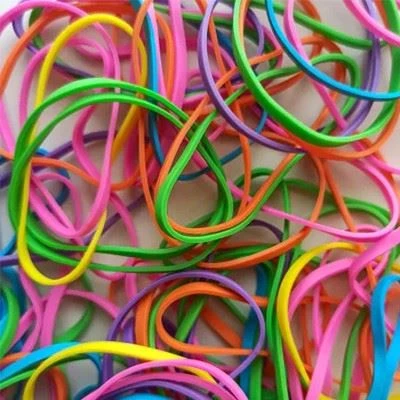
Crafts: In the world of crafts, rubber bands are used for a variety of creative projects, such as making jewelry, hair accessories, or decorative items. Crafters often want their rubber bands to maintain their vibrant colors, even if they get wet during the crafting process or when worn. Our range of Neon Colored Rubber Bands offers a wide selection of bright and long-lasting colors that are suitable for all types of craft projects.
Conclusion and Call to Action
In conclusion, while the possibility of rubber bands losing color when wet exists, it largely depends on the type of coloring agent, the quality of the coloring process, and the specific conditions of exposure. At our company, we are committed to providing rubber band colors that are durable, vibrant, and resistant to color loss.
If you're in the market for high-quality rubber band colors for your business or personal projects, we invite you to explore our extensive range of products. We offer a variety of colors, including Moving Rubber Bands and Poly Rubber Band, to meet your specific needs.

We understand that every customer has unique requirements, and we're here to help you find the perfect rubber band colors for your application. Whether you need a small quantity for a DIY project or a large order for your business, we can provide you with the products and support you need.
Contact us today to discuss your rubber band color requirements and to learn more about our products. We look forward to working with you and helping you achieve your goals with our high-quality rubber band colors.
References
- "The Science of Coloring Rubber Products." Journal of Polymer Science.
- "Color Fastness Testing Methods for Rubber Materials." ASTM International.
- "Factors Affecting the Durability of Rubber Band Colors." Rubber Chemistry and Technology.