

Hey there! As a supplier of natural rubber in various colors, I often get asked if the color of natural rubber affects its performance. It's a pretty interesting question, and one that I'm more than happy to dive into with you.
First off, let's understand what natural rubber is. Natural rubber is derived from the latex of rubber trees, mainly the Hevea brasiliensis tree. This latex is a milky - white substance that contains polymers of isoprene. When it comes to the color of natural rubber, it can vary from a light yellowish - brown to a darker, almost amber shade.
Now, to answer the big question: Does the color of natural rubber affect its performance? Well, the short answer is, in most cases, no. The color of natural rubber is mainly determined by factors like the age of the rubber tree, the region where it's grown, and the processing methods used.
Let's start with the age of the rubber tree. Younger rubber trees tend to produce latex that results in a lighter - colored rubber. As the tree matures, the latex might have a slightly different chemical composition, which can lead to a darker - colored end product. But this difference in color doesn't necessarily mean a difference in performance. The basic properties of rubber, such as its elasticity, tensile strength, and tear resistance, are mainly determined by the polymer structure of the isoprene, not the color.
The region where the rubber tree is grown also plays a role in the color of the natural rubber. Different soil types, climate conditions, and levels of sunlight can influence the chemical makeup of the latex. For example, rubber trees grown in areas with more sunlight might produce latex that results in a slightly darker rubber. But again, these environmental factors don't directly impact the key performance indicators of the rubber.
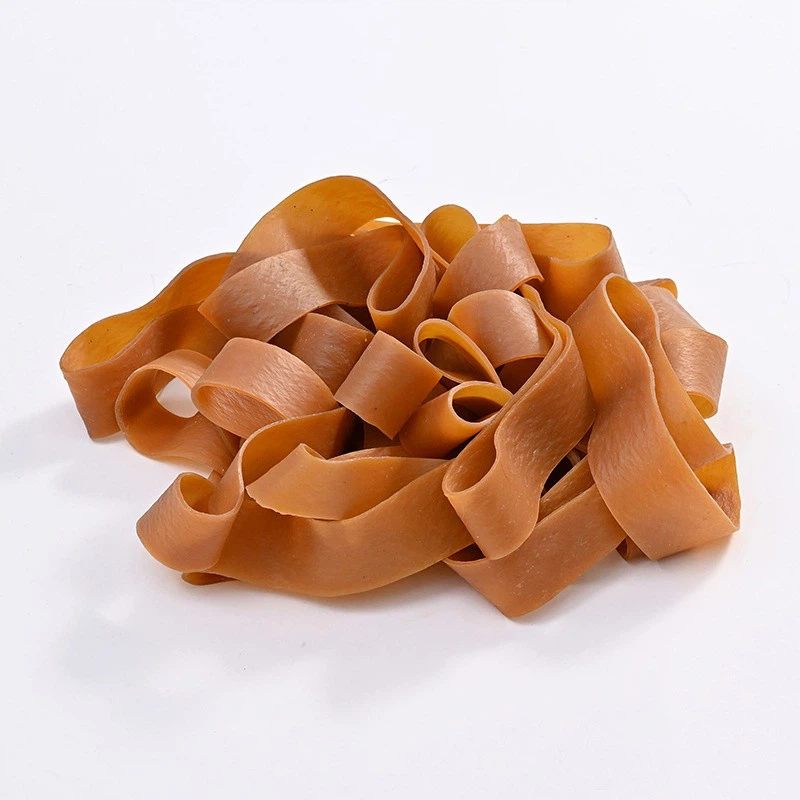

Processing methods are another factor that can affect the color of natural rubber. During the processing of latex into rubber, things like the addition of chemicals for coagulation, the drying process, and the use of antioxidants can change the color. If a rubber is processed with more aggressive chemicals or at higher temperatures, it might turn darker. However, modern processing techniques are designed to maintain the performance of the rubber while adjusting its color as needed.
Let's take a look at some specific performance aspects of natural rubber and how color doesn't seem to be a determining factor. Elasticity is one of the most important properties of rubber. Whether you have a Light Brown Natural Rubber Bands or a darker - colored rubber band, they should stretch and return to their original shape in a similar way. The elasticity of rubber comes from the long - chain polymers of isoprene that can uncoil and recoil when stretched and released.
Tensile strength is another crucial property. It refers to the maximum amount of stress a rubber can withstand before breaking. A Thick Natural Color Rubber Bands of any color should have a consistent tensile strength as long as it's made from good - quality natural rubber. The color has no direct correlation with how much force the rubber can handle before it snaps.
Tear resistance is also unaffected by the color of natural rubber. Tear resistance measures how well a rubber can resist being torn apart. Whether it's a Large Natural Rubber Bands with a light or dark color, the ability to resist tears depends on the molecular structure of the rubber and not its color.
However, there are some very rare cases where color might be indirectly related to performance. If the rubber has been contaminated during the processing, it could change both the color and the performance. For example, if there are impurities in the rubber that cause it to turn a strange color, these impurities might also weaken the rubber's structure and reduce its performance. But this is more of an issue with quality control rather than the color itself.
So, if you're in the market for natural rubber and you're worried about the color affecting performance, you can rest easy. You can choose the color that suits your aesthetic or branding needs without sacrificing on quality.
If you're interested in purchasing natural rubber of different colors, I'd love to have a chat with you. We can discuss your specific requirements, whether it's for industrial use, crafting, or any other application. Reach out, and let's start a conversation about getting the right natural rubber for you.
References
- “The Science of Rubber.” Rubber Manufacturers Association.
- “Natural Rubber: Properties and Applications.” Journal of Polymer Science.