

Natural rubber is a versatile material widely used in various industries, from automotive to consumer goods. One of the characteristics that can vary among natural rubber products is their color. As a natural rubber color supplier, I often encounter questions about whether the origin of natural rubber affects its color. In this blog post, I will explore this topic in depth, examining the factors that contribute to the color of natural rubber and how its origin plays a role.
Understanding Natural Rubber and Its Color
Natural rubber is derived from the latex of rubber trees, primarily the Hevea brasiliensis species. The latex is a milky white fluid that contains rubber particles suspended in an aqueous medium. When the latex is processed into rubber, the color can range from a light yellow or cream to a darker brown. This variation in color is due to a combination of factors, including the chemical composition of the latex, the processing methods used, and the presence of impurities.
The natural color of rubber is influenced by the presence of various organic compounds, such as proteins, lipids, and carbohydrates, which are naturally present in the latex. These compounds can react with each other and with oxygen during the processing and storage of the rubber, leading to changes in color. Additionally, the presence of impurities, such as dirt, bark, and other foreign materials, can also affect the color of the rubber.
The Role of Origin in Natural Rubber Color
The origin of natural rubber can have a significant impact on its color. Different regions of the world have different environmental conditions, soil types, and climate patterns, which can affect the growth and development of rubber trees. These factors can, in turn, influence the chemical composition of the latex and the color of the resulting rubber.
For example, rubber trees grown in regions with high rainfall and humidity tend to produce latex with a higher water content. This can result in a lighter-colored rubber, as the water dilutes the concentration of the organic compounds that contribute to color. On the other hand, rubber trees grown in drier regions may produce latex with a lower water content, leading to a darker-colored rubber.
Soil type can also play a role in the color of natural rubber. Soils that are rich in nutrients, such as nitrogen, phosphorus, and potassium, can promote the growth and development of rubber trees, resulting in a higher quality latex. This can lead to a lighter-colored rubber, as the latex contains fewer impurities and a more balanced chemical composition. Conversely, soils that are poor in nutrients may result in a lower quality latex, which can produce a darker-colored rubber.
Climate patterns, such as temperature and sunlight exposure, can also affect the color of natural rubber. Rubber trees grown in regions with high temperatures and intense sunlight may produce latex with a higher concentration of pigments, resulting in a darker-colored rubber. In contrast, rubber trees grown in cooler regions with less sunlight may produce latex with a lower concentration of pigments, leading to a lighter-colored rubber.
Processing Methods and Their Impact on Color
In addition to the origin of the natural rubber, the processing methods used can also have a significant impact on its color. The processing of natural rubber involves several steps, including coagulation, washing, drying, and vulcanization. Each of these steps can affect the color of the rubber, either by removing impurities or by causing chemical reactions that change the color of the rubber.
Coagulation is the process of separating the rubber particles from the aqueous medium in the latex. This is typically done by adding an acid or a salt to the latex, which causes the rubber particles to clump together and form a solid mass. The type of coagulant used and the conditions under which the coagulation takes place can affect the color of the rubber. For example, the use of a strong acid can cause the rubber to turn yellow or brown, while the use of a milder acid can result in a lighter-colored rubber.
Washing is the process of removing impurities from the coagulated rubber. This is typically done by rinsing the rubber with water or a chemical solution. The number of washes and the type of solution used can affect the color of the rubber. For example, washing the rubber with a solution containing a bleaching agent can result in a lighter-colored rubber, while washing the rubber with a solution containing a reducing agent can result in a darker-colored rubber.
Drying is the process of removing the remaining water from the washed rubber. This is typically done by heating the rubber in an oven or a dryer. The temperature and duration of the drying process can affect the color of the rubber. For example, drying the rubber at a high temperature for a long period of time can cause the rubber to turn yellow or brown, while drying the rubber at a lower temperature for a shorter period of time can result in a lighter-colored rubber.
Vulcanization is the process of cross-linking the rubber molecules to improve the physical properties of the rubber. This is typically done by heating the rubber with sulfur or another vulcanizing agent. The type of vulcanizing agent used and the conditions under which the vulcanization takes place can affect the color of the rubber. For example, the use of a sulfur-based vulcanizing agent can cause the rubber to turn yellow or brown, while the use of a non-sulfur-based vulcanizing agent can result in a lighter-colored rubber.
Examples of Natural Rubber Products and Their Colors
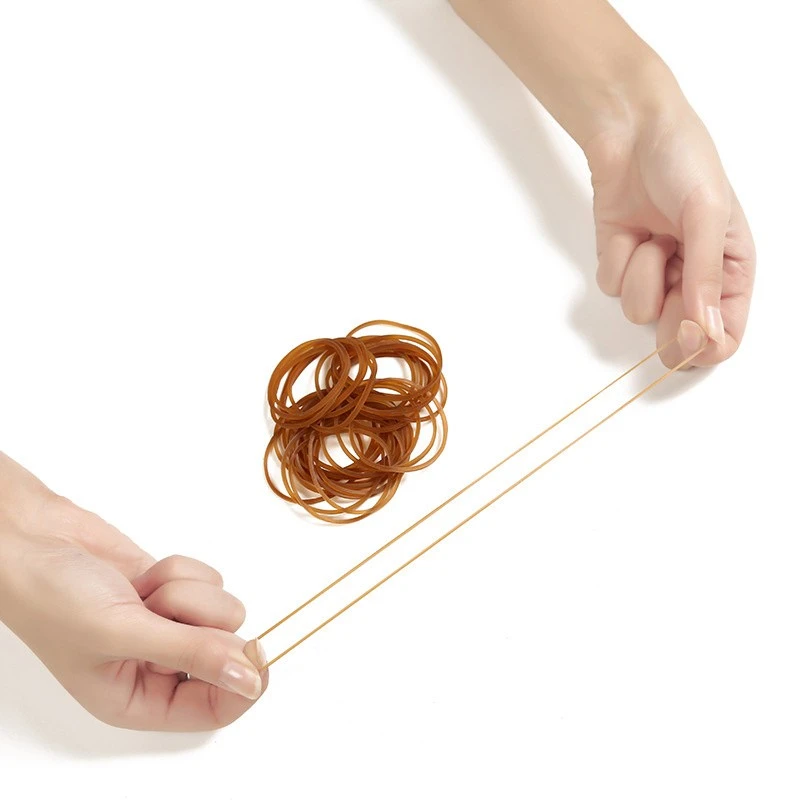
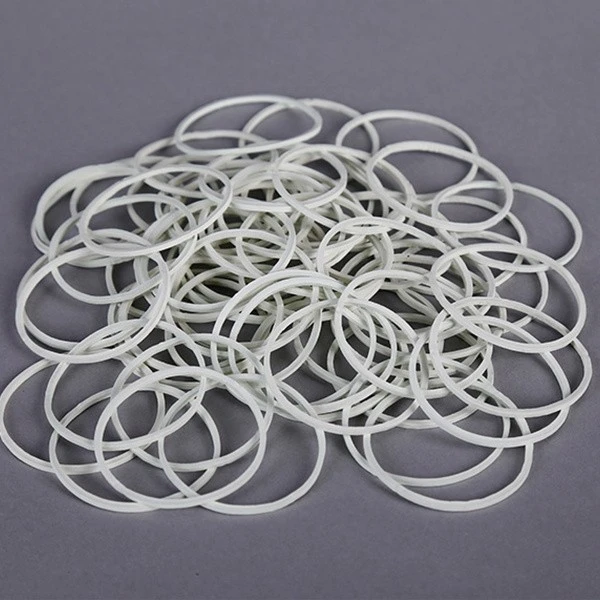
As a natural rubber color supplier, I offer a wide range of natural rubber products in different colors. Some of the most popular products include Light Brown Natural Rubber Bands, Thick Natural Color Rubber Bands, and Heat Resistant Natural Rubber Bands.
The color of these products can vary depending on the origin of the natural rubber and the processing methods used. For example, our light brown natural rubber bands are made from high-quality natural rubber that is sourced from regions with a favorable climate and soil conditions. The rubber is processed using a gentle coagulation and washing process to remove impurities and preserve the natural color of the rubber. The result is a light brown rubber band that is both durable and aesthetically pleasing.
Our thick natural color rubber bands are made from a blend of natural rubber and synthetic rubber to provide additional strength and durability. The natural rubber is sourced from regions with a high concentration of pigments, resulting in a darker-colored rubber band. The rubber is processed using a high-temperature vulcanization process to improve the physical properties of the rubber. The result is a thick, strong rubber band that is suitable for a variety of applications.
Our heat resistant natural rubber bands are made from a special type of natural rubber that is designed to withstand high temperatures. The rubber is sourced from regions with a high temperature and intense sunlight, resulting in a rubber band that has a high concentration of pigments and is resistant to heat. The rubber is processed using a special vulcanization process to improve the heat resistance of the rubber. The result is a heat resistant rubber band that is suitable for use in high-temperature applications.
Conclusion
In conclusion, the origin of natural rubber can have a significant impact on its color. Different regions of the world have different environmental conditions, soil types, and climate patterns, which can affect the growth and development of rubber trees and the chemical composition of the latex. Additionally, the processing methods used can also affect the color of the rubber, either by removing impurities or by causing chemical reactions that change the color of the rubber.
As a natural rubber color supplier, I understand the importance of providing high-quality natural rubber products that meet the specific needs of my customers. Whether you are looking for a light-colored rubber band for a decorative application or a heat-resistant rubber band for an industrial application, I can provide you with the right product at the right price.
If you are interested in learning more about our natural rubber products or would like to discuss your specific requirements, please feel free to contact me. I would be happy to answer any questions you may have and to provide you with a quote for your order.
References
- Arbelaiz, A., de la Caba, K., Guerrero, P., & Mondragon, I. (2005). Natural rubber: A review. Progress in Polymer Science, 30(7), 658-689.
- Bhowmick, A. K., & Stephens, H. L. (2001). Handbook of elastomers. Marcel Dekker.
- Choi, H. J., & Lee, J. H. (2010). Effect of coagulation method on the properties of natural rubber latex films. Journal of Applied Polymer Science, 116(2), 722-728.
- John, M. J., & Thomas, S. (2008). Biofibres and biocomposites. Carbohydrate Polymers, 71(3), 343-364.
- Rempel, G. L., & Byers, R. W. (1999). Rubber technology. Oxford University Press.