

Hey there! I'm a supplier of hot pink rubber bands, and I've been getting a lot of questions lately about how these vibrant little bands react to oil. So, I thought I'd dive into the topic and share what I've learned.
First off, let's talk about what hot pink rubber bands are made of. Most rubber bands, including our hot pink ones, are made from natural rubber or synthetic rubber compounds. Natural rubber comes from the latex of rubber trees, while synthetic rubber is man - made through chemical processes. These materials give rubber bands their stretchy and elastic properties.
Now, when it comes to oil, there are different types, such as vegetable oil, mineral oil, and motor oil. Each type can have a different effect on hot pink rubber bands.
Reaction with Vegetable Oil
Vegetable oil is a common household oil, used mainly for cooking. When a hot pink rubber band comes into contact with vegetable oil, the reaction is relatively mild. Vegetable oil is made up of triglycerides, which are esters of fatty acids and glycerol.
The rubber in the band might start to absorb the vegetable oil over time. This absorption can cause the rubber to swell slightly. You'll notice that the band becomes a bit softer and more pliable. The color of the hot pink band might also start to fade a little as the oil can interact with the pigments in the rubber.

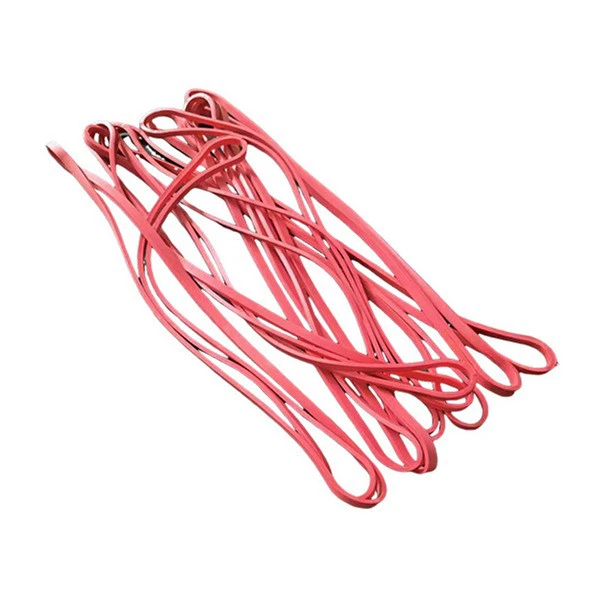
However, this is a slow - process. If you just accidentally get a little vegetable oil on a rubber band, it won't immediately turn into a mess. But if the band is submerged in vegetable oil for a long period, say a few days or weeks, you'll see more significant changes. The swelling can make the band lose its original shape and elasticity, and it might not hold things together as well as it used to.
Reaction with Mineral Oil
Mineral oil is a petroleum - based product. It's often used in cosmetics, lubricants, and as a laxative. Mineral oil has a different chemical composition compared to vegetable oil.
When a hot pink rubber band meets mineral oil, the reaction is more pronounced. Mineral oil can dissolve some of the components in the rubber. The non - polar nature of mineral oil allows it to penetrate the rubber matrix more easily.
The rubber band will start to swell rapidly. It can become very soft and sticky. The color of the band will fade much faster than with vegetable oil. In some cases, the band might even break down completely if left in mineral oil for an extended time. The reason for this is that the mineral oil disrupts the cross - linking in the rubber, which is what gives the rubber its strength and elasticity.
Reaction with Motor Oil
Motor oil is a complex mixture of hydrocarbons and additives designed to lubricate engines. It's a harsher substance for rubber bands.
Motor oil contains various chemicals, including detergents, antioxidants, and anti - wear agents. These chemicals can have a very negative impact on hot pink rubber bands.
When a rubber band touches motor oil, it will quickly start to degrade. The band will become extremely soft and lose its shape almost immediately. The color will fade, and the rubber might turn a dark, murky color due to the contaminants in the motor oil. The additives in the motor oil can react with the rubber, causing it to break down at a molecular level.
After just a few hours in motor oil, a hot pink rubber band can become so weak that it falls apart when you try to stretch it. So, if you're working on a project where rubber bands might come into contact with motor oil, it's best to keep them far away.
Why Does This Matter for a Supplier?
As a supplier of hot pink rubber bands, understanding these reactions is crucial. We need to inform our customers about the proper use and care of our products. For example, if a customer is using our Pink Anti Static Rubber Bands in an environment where they might come into contact with oil, we can advise them on how to prevent damage.
We also use this knowledge to improve our products. We're constantly researching ways to make our rubber bands more resistant to oil and other chemicals. This could involve using different rubber compounds or adding protective coatings to the bands.
Tips for Protecting Hot Pink Rubber Bands from Oil
If you want to keep your hot pink rubber bands in top shape and away from the negative effects of oil, here are some tips:
- Keep them separate: Store your rubber bands in a place where they won't come into contact with oil. For example, if you have a toolbox with oil - based lubricants, keep the rubber bands in a separate container.
- Clean spills immediately: If you accidentally get oil on a rubber band, wipe it off as soon as possible. Use a clean, dry cloth to remove as much oil as you can.
- Choose the right rubber bands for the job: If you know you'll be working in an environment with oil, consider using rubber bands that are specifically designed to be oil - resistant. We offer Light Pink Rubber Band and Large Pink Rubber Bands in different qualities, and some of them are more suitable for oil - prone situations.
Wrapping Up
In conclusion, hot pink rubber bands react differently to various types of oil. Vegetable oil causes slow - swelling and mild color fading, while mineral oil and motor oil can cause rapid degradation. As a supplier, we're committed to providing high - quality rubber bands and sharing knowledge about their proper use.
If you're interested in purchasing our hot pink rubber bands or have any questions about their performance in different environments, don't hesitate to reach out. We're here to help you find the perfect rubber bands for your needs. Whether you're using them for office supplies, crafts, or industrial applications, we've got you covered.
References
- "The Chemistry of Rubber" - Chemistry textbooks on polymer science
- "Properties of Mineral Oils and Their Interactions with Polymers" - Journal of Polymer Chemistry
- "Vegetable Oils: Composition and Reactions" - Food Chemistry Journals