

As a rubber band color supplier, ensuring consistent color in a batch of rubber bands is crucial. It not only meets the quality standards expected by our customers but also helps in building a reliable brand image. In this blog, I'll share some of the key steps and considerations we take to achieve this consistency.

Understanding the Basics of Rubber Band Coloring
First off, it's important to know how rubber bands get their color. Usually, colorants are added during the rubber - band manufacturing process. These colorants can be in the form of pigments or dyes. Pigments are insoluble particles that disperse in the rubber matrix, while dyes are soluble substances.
The choice between pigments and dyes depends on several factors. Pigments are often preferred for their better lightfastness and heat resistance. This means that rubber bands colored with pigments are less likely to fade or change color over time, especially when exposed to sunlight or high temperatures. On the other hand, dyes can offer more intense and vivid colors, but they may not be as stable.
Selecting High - Quality Colorants
One of the most important steps in ensuring consistent color is to source high - quality colorants. We work closely with trusted suppliers who can provide us with colorants that have consistent chemical compositions. This is because even small variations in the chemical makeup of a colorant can lead to noticeable differences in the final color of the rubber bands.
For example, if a pigment contains impurities, it can affect how it disperses in the rubber and ultimately change the color. We test each batch of colorants we receive to make sure they meet our strict quality standards. This includes checking for color strength, hue, and lightfastness.
Precise Mixing and Dispersion
Once we have the right colorants, the next step is to mix them properly with the rubber compound. This is a critical process because uneven mixing can result in color variations within the batch.
We use specialized mixing equipment to ensure that the colorants are evenly dispersed throughout the rubber. The mixing time and speed are carefully controlled. If the mixing is too short, the colorants may not be fully dispersed, leading to streaks or patches of different colors in the rubber bands. On the other hand, over - mixing can cause the rubber to degrade, which can also affect the color.
Monitoring the Manufacturing Process
The manufacturing process of rubber bands is complex, and many factors can influence the final color. We monitor the process closely at every stage.
Temperature is a key factor. If the temperature during the vulcanization process (where the rubber is cured) is too high or too low, it can change the chemical properties of the rubber and the colorants. We use temperature sensors to keep the temperature within a narrow range to ensure consistent color.
The pressure during the molding process also matters. Inconsistent pressure can cause the rubber to flow unevenly, which may result in color differences. We use pressure - monitoring devices to maintain a stable pressure throughout the molding process.
Quality Control Checks
After the rubber bands are manufactured, we conduct thorough quality control checks. We randomly select samples from each batch and use color - measuring instruments to compare their colors against a standard color sample.
These instruments can measure the color in terms of parameters like hue, saturation, and lightness. If the color of the samples deviates from the standard by more than an acceptable margin, we take corrective actions. This may involve adjusting the manufacturing process or re - evaluating the colorant mixture.
Dealing with Different Types of Rubber Bands
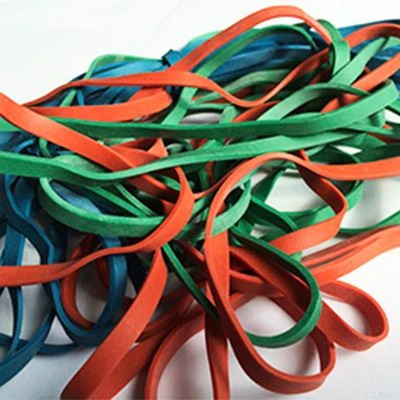
We supply a variety of rubber bands, such as Poly Rubber Band, Stationery Rubber Bands, and Bright Colored Rubber Bands. Each type may have different requirements for color consistency.
For example, stationery rubber bands need to have a consistent and pleasant color because they are often used in an office or school setting where appearance matters. Bright colored rubber bands, on the other hand, need to have vivid and true - to - hue colors. We adjust our manufacturing and quality control processes accordingly for each type of rubber band.
Batch - to - Batch Consistency
In addition to ensuring consistent color within a batch, we also strive for batch - to - batch consistency. This is important for our customers who may need to order multiple batches of rubber bands over time and expect the color to be the same.
To achieve this, we keep detailed records of each manufacturing batch, including the type and amount of colorants used, the mixing parameters, and the manufacturing conditions. This allows us to reproduce the same color in future batches.
Customer Feedback and Continuous Improvement
We value our customers' feedback. If a customer notices any color inconsistencies, we take it very seriously. We investigate the issue immediately to find out what went wrong and take steps to prevent it from happening again.
Based on customer feedback and our own quality control data, we are constantly looking for ways to improve our processes. This may involve upgrading our mixing equipment, changing our colorant suppliers, or adjusting our quality control procedures.
Conclusion
Ensuring consistent color in a batch of rubber bands is a multi - step process that requires attention to detail at every stage. From selecting high - quality colorants to monitoring the manufacturing process and conducting thorough quality control checks, we leave no stone unturned.
If you're in the market for rubber bands with consistent and vibrant colors, we'd love to hear from you. Whether you need Poly Rubber Band, Stationery Rubber Bands, or Bright Colored Rubber Bands, we can provide you with products that meet your color requirements. Contact us to start a procurement discussion and see how we can meet your needs.
References
- "Rubber Technology Handbook" by Werner Hofmann
- "Color Science: Concepts and Methods, Quantitative Data and Formulae" by Gunter Wyszecki and W. S. Stiles