

Choosing the right size of white rubber bands can be a bit tricky, but don't worry! As a white rubber bands supplier, I've got some tips and insights to share with you. In this blog, I'll walk you through the factors you need to consider and how to make the best choice for your specific needs.
Why Size Matters
First off, let's talk about why the size of white rubber bands is so important. The size determines how well the rubber band will perform its intended function. Whether you're using them for office supplies, crafts, or industrial purposes, getting the right size ensures that the rubber band can hold things together securely without breaking or being too loose.
Measuring Rubber Band Sizes
Before we dive into choosing the right size, it's essential to understand how rubber band sizes are measured. There are two main measurements: length and width. The length is the distance around the outside of the rubber band when it's laid flat, and the width is the thickness of the rubber band from one side to the other.
Factors to Consider
Intended Use
The first thing you need to think about is what you'll be using the white rubber bands for. If you're using them to bundle a few papers together in the office, you'll need a different size than if you're using them for heavy-duty industrial applications. For light tasks like holding papers or small objects, a thinner and smaller rubber band will do the job. On the other hand, if you're using them to secure large items or in a high-stress environment, you'll need a thicker and larger rubber band.
For example, if you're a teacher and need to bundle up stacks of worksheets, a thin white rubber band will be sufficient. But if you're a mechanic using rubber bands to hold parts in place during assembly, you'll want a Thick White Rubber Band that can withstand more pressure.
Material Being Bundled
The type of material you're bundling also plays a significant role in determining the right size of rubber band. If you're bundling soft materials like fabric or paper, you can use a smaller and thinner rubber band. However, if you're bundling hard or rough materials like wood or metal, you'll need a stronger and larger rubber band to prevent it from breaking.
For instance, if you're making a craft project with fabric scraps, a small white rubber band will work great. But if you're using rubber bands to secure a wooden frame, you'll need a Big White Rubber Bands that can handle the weight and friction.

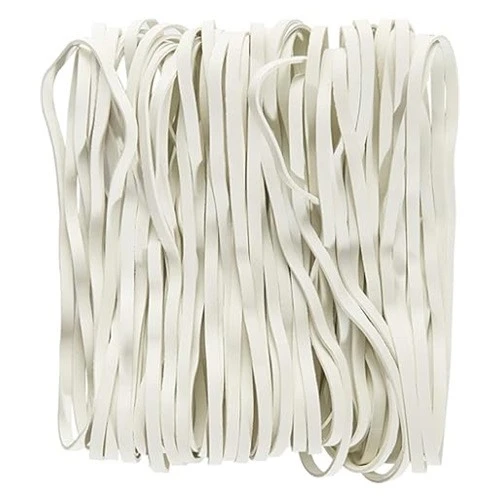
Environment
The environment in which the rubber bands will be used is another important factor. If the rubber bands will be exposed to extreme temperatures, moisture, or chemicals, you'll need to choose a size and type that can withstand these conditions. For example, if you're using rubber bands in a freezer, you'll need a rubber band that won't become brittle and break in the cold.
In this case, an Anti Aging White Rubber Band might be a good choice as it's designed to resist the effects of aging and environmental factors.
Common Sizes and Their Uses
Small White Rubber Bands
Small white rubber bands are typically around 1 - 2 inches in length and 1/8 - 1/4 inch in width. These are great for light tasks like holding papers, small items, or for craft projects. They're also handy for organizing small things like cables or jewelry.
Medium White Rubber Bands
Medium-sized white rubber bands are usually 2 - 4 inches in length and 1/4 - 3/8 inch in width. These are suitable for a wider range of tasks, such as bundling larger stacks of papers, holding small tools together, or for use in light industrial applications.
Large White Rubber Bands
Large white rubber bands are 4 inches or more in length and 3/8 inch or wider in width. These are ideal for heavy-duty tasks, such as securing large items, holding together bulky materials, or for use in industrial settings where more strength is required.
How to Test the Right Size
Once you've narrowed down your options based on the factors above, it's a good idea to test the rubber bands before making a large purchase. You can do this by trying out a few different sizes on the materials you'll be using them with. Make sure the rubber band stretches easily without breaking and holds the items securely in place.
If you're not sure which size to choose, you can always ask for samples from your supplier. As a white rubber bands supplier, I'm more than happy to provide samples so you can test them out and find the perfect size for your needs.
Conclusion
Choosing the right size of white rubber bands doesn't have to be complicated. By considering the intended use, the material being bundled, and the environment, you can make an informed decision. Remember to test the rubber bands before making a large purchase to ensure they meet your requirements.
If you're in the market for high-quality white rubber bands, I'd love to help you find the right size for your needs. Whether you need a small quantity for a one-time project or a large order for your business, I can provide you with the best options at competitive prices. Don't hesitate to reach out and start a conversation about your rubber band needs.
References
- "Rubber Band Basics" - Rubber Band Manufacturer's Handbook
- "Choosing the Right Rubber Band for Your Application" - Industrial Supply Magazine