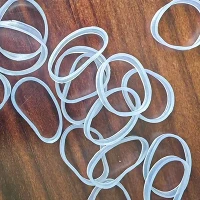

Rubber bands are essential accessories that we all use at any time. They can be used to bundle and store items, secure storage products, or be used as hair accessories that come into contact with the hair or wrist. There are many different types of rubber bands on the market, and the most common materials are rubber, latex, and silicone.
What are the differences between these three types?
1. Rubber Bands
The main function of rubber bands is to provide excellent rebound strength, tensile strength, and softness. Therefore, rubber bands are classified into different grades and materials. Currently, the most common type is made of rubber. However, rubber has no international standards in my country and is used in all industries and on all kinds of items. Rubber bands can also be found on household items and even food. Therefore, consumers cannot accurately distinguish between rubber bands and other materials, which can pose a health risk. Rubber itself is non-toxic, but excessive addition of catalysts such as sulfur, talc, pigments, and calcium carbonate during high-temperature vulcanization makes it difficult to guarantee the quality and safety of this material. Once released to the market, exposure to high temperatures or environmental factors can pose health risks, including severe headaches, fatigue, and discomfort.
2. Latex rubber bands
Latex is relatively safer. Rubber hydrocarbons only account for 20%-40% of the total composition. Components other than processed rubber include white paper, lipids, sugars, and inorganic compounds. Water accounts for approximately 40%-70%, and ash content is 0.4%. Compared to rubber, most of the added ingredients are harmless compounds, and the structural adhesive is simpler, making it more environmentally friendly. However, due to the higher raw material prices, the product price is also higher.
3. Silicone rubber bands
Compared to rubber and latex bands, silicone rubber bands have different properties. They are made of synthetic silicone rubber, primarily methyl and methyl vinyl, which provides greater stability and non-conflict resistance. It does not react chemically with other substances and maintains a certain level of softness, toughness, and resilience under varying conditions, maintaining consistent performance. Silicone rubber bands offer excellent safety, stability, and durability.
Rubber bands currently serve a wide range of applications, with different industries offering different choices. Rubber bands can be categorized into two types: general-purpose and practical, and safe and environmentally friendly. Silicone rubber bands fall into this category, offering a more affordable price, often calculated by the kilogram. Therefore, they are recommended for less demanding requirements. Silicone rubber bands, on the other hand, are primarily produced through high-temperature compression molding by silicone rubber band manufacturers. While the material is relatively high, pricing is subject to change. However, the product quality and longevity are significantly superior.