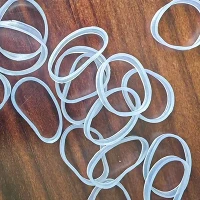

Rubber bands are common in our daily lives. Do you know their history? Who invented them?
Let Daoak take a look.
Rubber bands, also known as latex rings, are short loops made of rubber and latex. Invented on March 17, 1845, by Stephen Perry, they are widely used in industry, agriculture, transportation, culture and sports, energy and electricity, healthcare, and daily life. With a history spanning over 170 years, and over 90 years in my country, they are used in a wide variety of applications. It's safe to say that rubber bands are an essential part of our lives
The rubber bands we often refer to as "latex rings" are actually made from natural rubber. The origin of rubber dates back to the discovery and application of rubber by our ancestors in South America over 1,000 years ago. These ancestors fashioned balls from natural rubber latex for recreation. By applying latex to shoes and allowing it to solidify into layers of film, waterproof shoe covers were created. Rubber bottles and other containers for holding water were also made. Even rubber boats capable of carrying people were created.
When Christopher Columbus discovered the Americas during his second voyage from 1493 to 1496, he saw indigenous people in Haiti playing with rubber balls that bounced off the ground. He found them fascinating and intriguing, and brought them back to Europe after his second expedition (this discovery is well documented in Spanish historical documents).
From that time on, Europeans became aware of rubber (natural rubber). Initially, Europeans didn't know the name for it; they only knew that the locals called the rubber tree "cahuchu," the "weeping tree." Later, when people discovered that rubber could erase pencil marks, the English word "rubber" was adopted.